-
Shop
- Adidas
- Advanced Technologies
- AI Skills
- AI Skills Mastery 2026 Collection
- Bathroom
- Best-Sellers
- Calvin Klein
- Car Accessories
- Confidence
- Dating & Social Skills
- Digital Resources
- AI & Technology
- Beauty
- Car Buying & Ownership
- Cozy Feast Collection
- Electronics & Technology
- Financial Education
- Hobbies
- Home Styling & Organization
- Kitchen & Recipes
- Mindset
- Online Business
- Parenting & Child Development
- Personal Style & Fashion
- Pet Lifestyle & Wellness
- Smart Life with AI
- Travel Planning
- Wellness
- Yoga & Fitness
- Education & Learning
- Family & Parenting
- Fashion
- Alexander McQueen
- Bags
- Bags & Wallets
- Balenciaga
- Belts
- Blazers
- Blouses & Shirts
- Bottega Veneta
- Brunello Cucinelli
- Burberry
- Chanel
- Chloé
- Dior
- Dolce & Gabbana
- Dresses
- Etro
- Fendi
- Gucci
- Hats & Hair Accessories
- Jacquemus
- Jewelry
- Jil Sander
- Keychains
- Kiton
- Luggage
- Luggage Bags
- Miu Miu
- Off-White
- Outerwear
- Prada
- Rick Owens
- Saint Laurent
- Scarves
- Shoes
- Socks & Tights
- Sunglasses
- The Row
- Tom Ford
- Valentino
- Valentino Garavani
- Versace
- Vivienne Westwood
- Watches
- Fashion Accessories
- Furniture
- Gadgets
- Health & Beauty
- Health & Wellness
- Home & Garden
- Home Decor
- Home Electronics
- Home Supplies
- Kids & Babies
- Kitchen
- Kitchen Best-Sellers
- Lighting
- Online Business for Beginners
- Patio, Lawn & Garden
- Personal Growth
- Pet Care
- Pet Supplies
- Pets
- Smart Amazon Shopping
- Smart Home Living Guides
- Sport & Outdoors
- Stress Relief & Relaxation
- Super Deals
- TikTok Growth & Monetization Mastery
- Travel
- Travel & Adventure
- Wealth
- Wealth Building
- Budgeting & Saving
- Cryptocurrency Investing
- Debt Management
- Entrepreneurship & Business Growth
- Family Finance & Budgeting
- Financial Independence
- Financial Mindset & Psychology
- Financial Planning
- Frugal Living & Expense Hacks
- Goal Setting
- High-Income Skills
- Investing Basics
- Leadership
- Motivation
- Networking & Mentorship
- Passive Income Strategies
- Real Estate Investing
- Side Hustles
- Stock Market Investing
- Popular
- Best deals
- Blog
Used Car Dealership Checklist: Budget, History & Fees
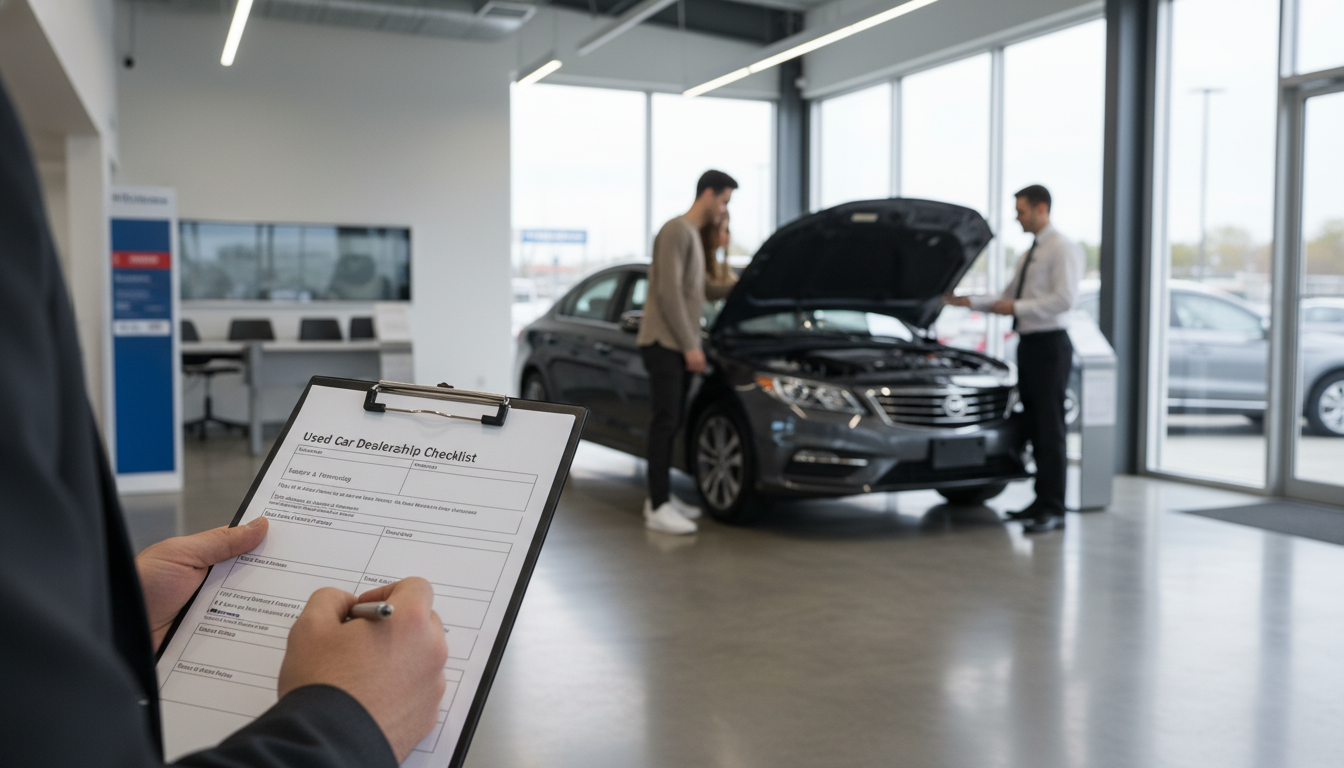
What should I know before buying a used car from a dealership?
Buying a used car from a dealership can be convenient, but it pays to walk in prepared. Know your budget, research the exact model you want, and treat every add-on, fee, and promise as something that must be verified in writing. A good deal is more than the sticker price—it’s the vehicle’s condition, history, financing terms, and total out-the-door cost.
Start with a realistic budget and the full “out-the-door” number
Set a top-line budget that includes taxes, title, registration, documentation fees, and any dealer-installed accessories. Ask for the out-the-door price early and compare it across similar listings. This prevents surprises like high fees or unwanted add-ons that inflate the final total.
Check the vehicle history and confirm it matches the car
Request a vehicle history report and verify the VIN on the report matches the VIN on the car (door jamb and dashboard). Look for red flags such as salvage branding, flood damage, odometer issues, frequent ownership changes, or gaps in registration. A clean report doesn’t guarantee a perfect car, but a troubling report is a strong reason to walk away.
Inspect and test-drive like you’re trying to find problems
Test-drive on city streets and highways, and try a cold start if possible. Listen for suspension clunks, brake vibration, transmission hesitation, and abnormal engine noises. Check tire wear consistency and look for signs of poor repairs (mismatched paint, uneven panel gaps). If you’re not confident assessing condition, pay for a pre-purchase inspection by an independent mechanic.
Understand the warranty status and return policy
Ask whether any factory warranty remains and whether the dealership offers a limited warranty or sells the car “as-is.” If a return window is advertised, confirm the rules in writing, including time limits, mileage caps, and any restocking fees.
Review financing, trade-in, and the contract details
Compare dealer financing with a pre-approval from your bank or credit union. If you’re trading in, separate the negotiations: lock the vehicle price first, then the trade value, then financing. Before signing, read the buyers order and retail installment contract carefully to confirm the price, interest rate, term length, and that any add-ons are truly optional.
For a deeper walkthrough and a checklist you can use at the lot, visit https://winkplaza.com/what-should-i-know-before-buying-a-used-car-from-a-dealership/.
FAQ
Should I get a pre-purchase inspection for a dealership used car?
Yes—an independent inspection can uncover hidden issues like leaks, prior damage, or worn components that aren’t obvious on a test drive. The small upfront cost can prevent expensive repairs later and gives you leverage to negotiate or walk away.
















Leave a comment