-
Shop
- Adidas
- Advanced Technologies
- AI Skills
- AI Skills Mastery 2026 Collection
- Bathroom
- Best-Sellers
- Calvin Klein
- Car Accessories
- Confidence
- Dating & Social Skills
- Digital Resources
- AI & Technology
- Beauty
- Car Buying & Ownership
- Cozy Feast Collection
- Electronics & Technology
- Financial Education
- Hobbies
- Home Styling & Organization
- Kitchen & Recipes
- Mindset
- Online Business
- Parenting & Child Development
- Personal Style & Fashion
- Pet Lifestyle & Wellness
- Smart Life with AI
- Travel Planning
- Wellness
- Yoga & Fitness
- Education & Learning
- Family & Parenting
- Fashion
- Alexander McQueen
- Bags
- Bags & Wallets
- Balenciaga
- Belts
- Blazers
- Blouses & Shirts
- Bottega Veneta
- Brunello Cucinelli
- Burberry
- Chanel
- Chloé
- Dior
- Dolce & Gabbana
- Dresses
- Etro
- Fendi
- Gucci
- Hats & Hair Accessories
- Jacquemus
- Jewelry
- Jil Sander
- Keychains
- Kiton
- Luggage
- Luggage Bags
- Miu Miu
- Off-White
- Outerwear
- Prada
- Rick Owens
- Saint Laurent
- Scarves
- Shoes
- Socks & Tights
- Sunglasses
- The Row
- Tom Ford
- Valentino
- Valentino Garavani
- Versace
- Vivienne Westwood
- Watches
- Fashion Accessories
- Furniture
- Gadgets
- Health & Beauty
- Health & Wellness
- Home & Garden
- Home Decor
- Home Electronics
- Home Supplies
- Kids & Babies
- Kitchen
- Kitchen Best-Sellers
- Lighting
- Online Business for Beginners
- Patio, Lawn & Garden
- Personal Growth
- Pet Care
- Pet Supplies
- Pets
- Smart Amazon Shopping
- Smart Home Living Guides
- Sport & Outdoors
- Stress Relief & Relaxation
- Super Deals
- TikTok Growth & Monetization Mastery
- Travel
- Travel & Adventure
- Wealth
- Wealth Building
- Budgeting & Saving
- Cryptocurrency Investing
- Debt Management
- Entrepreneurship & Business Growth
- Family Finance & Budgeting
- Financial Independence
- Financial Mindset & Psychology
- Financial Planning
- Frugal Living & Expense Hacks
- Goal Setting
- High-Income Skills
- Investing Basics
- Leadership
- Motivation
- Networking & Mentorship
- Passive Income Strategies
- Real Estate Investing
- Side Hustles
- Stock Market Investing
- Popular
- Best deals
- Blog
The Pet Effect: Research-Backed Daily Mental Health Habits
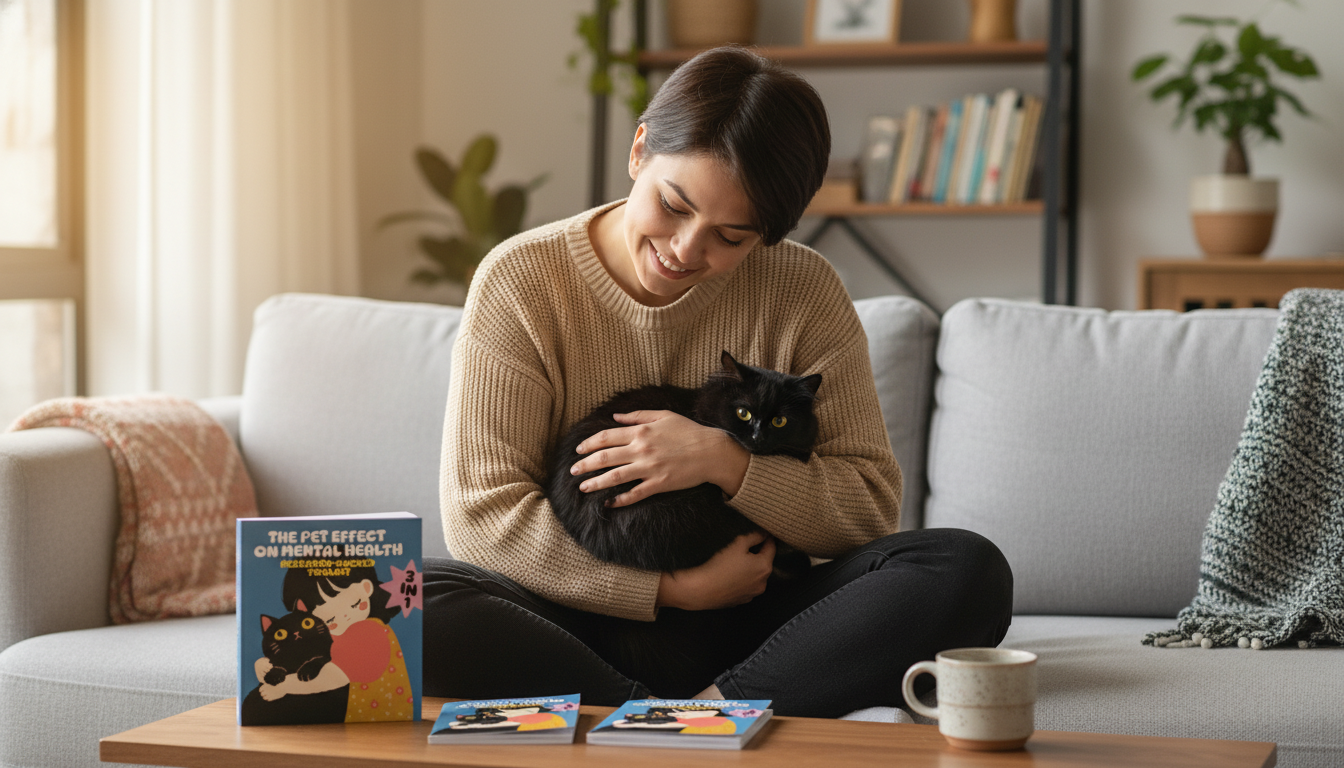
The Pet Effect on Mental Health: A Research-Backed Toolkit for Daily Use
Pets can shape mood, stress levels, routines, and social connection in ways that feel intuitive—and many findings help explain why. This guide organizes what research suggests about the mental health benefits (and limits) of living with animals, then turns those insights into simple, repeatable practices you can use with The Pet Effect on Mental Health: Research-Backed Toolkit (3-in-1 digital download bundle).
What “the pet effect” means (and what it doesn’t)
“The pet effect” is a shorthand for the observed links between human–animal interaction and outcomes like stress, loneliness, and overall well-being. In everyday terms: spending time with a companion animal often coincides with feeling calmer, more connected, and more grounded.
At the same time, the research picture is mixed because many studies show correlation rather than clear causation. A pet might improve someone’s mood, but it’s also possible that people who are already doing relatively well are more likely to adopt or keep a pet. Context matters: personality, home environment, finances, the animal’s temperament, and a person’s support system can all influence whether pet ownership feels stabilizing or stressful.
Results also vary because studies measure different things—some use self-reported feelings, while others track biomarkers like heart rate or blood pressure. Sample sizes, cultural differences, and living situations (alone vs. with family, urban vs. rural) can change what “benefit” looks like. The most realistic expectation is that pets can support mental health habits, but they aren’t a substitute for clinical care when it’s needed.
How pets may support mental health: key pathways backed by evidence
Research tends to cluster around a few mechanisms that make pet time feel emotionally “useful” in daily life.
1) Stress buffering
Gentle interaction—petting, sitting together, or even watching a pet rest—can be associated with lower perceived stress and calmer physiological responses in some settings. The CDC summarizes several potential health benefits of pet connection, including opportunities for stress relief and increased physical activity (CDC: Health Benefits of Pets).
2) Routines and behavioral activation
Feeding, walking, cleaning, and play create structure. That structure can function like “behavioral activation”: small actions that help nudge mood and energy in a steadier direction, especially when motivation is low.
3) Social connection
Pets can increase friendly micro-interactions—quick chats on walks, a wave to a neighbor, or sharing pet stories with coworkers. NIH notes that pets may help decrease stress and improve social interaction, while emphasizing that outcomes differ by person and situation (NIH News in Health: The Power of Pets).
4) Meaning and self-efficacy
Providing care can reinforce purpose (“I matter to someone”), competence (“I can handle this”), and gentler self-talk (“Good enough is still good care”). Over time, those small wins can support resilience.
5) Mindfulness moments
Pets naturally draw attention to the present: the rhythm of breathing, the warmth of fur, the back-and-forth of play. The American Psychological Association describes how human–animal bonds can be deeply rewarding and emotionally significant (APA: Why do we love our pets?).
Pet-related mental health benefits and practical actions
| Potential benefit | What research often measures | Simple practice to try | When to be cautious |
|---|---|---|---|
| Lower stress | Perceived stress ratings; heart rate/blood pressure in some studies | 2 minutes of slow petting while matching breath to strokes | If the pet becomes overstimulated or the person feels pressured to “feel better” quickly |
| Improved mood | Mood scales; daily affect tracking | Pair a daily care task with a brief positive reflection (one thing done well) | If caregiving increases guilt or rumination |
| Less loneliness | Loneliness scales; social support measures | One short “pet-led” social moment per week (walk route, park, neighbor hello) | If social comparisons or conflict with others’ pets adds stress |
| More routine | Sleep/wake regularity; activity levels | Anchor mornings with a consistent pet-care sequence | If schedules become rigid and trigger anxiety |
| Greater activity (especially with dogs) | Step counts; exercise frequency | 10–20 minute walk at a comfortable pace; track consistency over intensity | If physical limits or weather barriers create shame or overexertion |
Dog companionship and mental health: what tends to change most
Dogs often amplify a few pathways because they commonly require outdoor time, movement, and training consistency.
Activity and outdoor time
Dog walking can increase movement, daylight exposure, and predictable breaks from screens. Even short loops can act as “reset points” during long workdays.
Social facilitation
Training and bonding
Stress and responsibility balance
Adaptations for non-walkers
Limits, risks, and who may need a different approach
Using the Research-Backed Toolkit: ebook, guide, and checklist flow
Ebook
Quick-start guide
Checklist
A simple 7-day plan
To make mornings calmer for you and your pet, pair the toolkit with The No-Phone Morning Ritual Checklist: Reset Your Mind Before You Scroll to reduce screen-driven stress before the day starts.
Download details and who it’s for
The Pet Effect on Mental Health: Research-Backed Toolkit (3-in-1 digital download bundle) is best for current pet owners, prospective owners, and supportive helpers (partners, caregivers, therapists, coaches) who want a structured, repeatable approach. It works with dogs, cats, and other companion animals, with easy adaptations for species, temperament, apartment living, shared homes, and busy schedules.
FAQ
What is the pet effect theory?
The pet effect theory refers to observed associations between companion animals and human well-being, such as lower loneliness or stress in some groups. Findings are mixed because study designs differ and many factors (like support systems and caregiving demands) shape outcomes, so it’s best seen as a possibility—rather than a guarantee.
How does having a dog impact a person’s mental health?
Having a dog can support mental health through routine, physical activity, outdoor time, and increased social interaction, which may reduce feelings of isolation and improve daily structure. Benefits vary, and without adequate time, resources, or support, caregiving demands can also add stress.
Recommended for you


4-Part Share Investing Roadmap for DIY Investors
May 22, 2026
Grow Eyelashes Naturally in 3 Days: What Works Fast
May 22, 2026













Leave a comment