-
Shop
- Adidas
- Advanced Technologies
- AI Skills
- AI Skills Mastery 2026 Collection
- Bathroom
- Best-Sellers
- Calvin Klein
- Car Accessories
- Confidence
- Dating & Social Skills
- Digital Resources
- AI & Technology
- Beauty
- Car Buying & Ownership
- Cozy Feast Collection
- Electronics & Technology
- Financial Education
- Hobbies
- Home Styling & Organization
- Kitchen & Recipes
- Mindset
- Online Business
- Parenting & Child Development
- Personal Style & Fashion
- Pet Lifestyle & Wellness
- Smart Life with AI
- Travel Planning
- Wellness
- Yoga & Fitness
- Education & Learning
- Family & Parenting
- Fashion
- Alexander McQueen
- Bags
- Bags & Wallets
- Balenciaga
- Belts
- Blazers
- Blouses & Shirts
- Bottega Veneta
- Brunello Cucinelli
- Burberry
- Chanel
- Chloé
- Dior
- Dolce & Gabbana
- Dresses
- Etro
- Fendi
- Gucci
- Hats & Hair Accessories
- Jacquemus
- Jewelry
- Jil Sander
- Keychains
- Kiton
- Luggage
- Luggage Bags
- Miu Miu
- Off-White
- Outerwear
- Prada
- Rick Owens
- Saint Laurent
- Scarves
- Shoes
- Socks & Tights
- Sunglasses
- The Row
- Tom Ford
- Valentino
- Valentino Garavani
- Versace
- Vivienne Westwood
- Watches
- Fashion Accessories
- Furniture
- Gadgets
- Health & Beauty
- Health & Wellness
- Home & Garden
- Home Decor
- Home Electronics
- Home Supplies
- Kids & Babies
- Kitchen
- Kitchen Best-Sellers
- Lighting
- Online Business for Beginners
- Patio, Lawn & Garden
- Personal Growth
- Pet Care
- Pet Supplies
- Pets
- Smart Amazon Shopping
- Smart Home Living Guides
- Sport & Outdoors
- Stress Relief & Relaxation
- Super Deals
- TikTok Growth & Monetization Mastery
- Travel
- Travel & Adventure
- Wealth
- Wealth Building
- Budgeting & Saving
- Cryptocurrency Investing
- Debt Management
- Entrepreneurship & Business Growth
- Family Finance & Budgeting
- Financial Independence
- Financial Mindset & Psychology
- Financial Planning
- Frugal Living & Expense Hacks
- Goal Setting
- High-Income Skills
- Investing Basics
- Leadership
- Motivation
- Networking & Mentorship
- Passive Income Strategies
- Real Estate Investing
- Side Hustles
- Stock Market Investing
- Popular
- Best deals
- Blog
No-Phone Morning Checklist: A Clear Start Before Scrolling
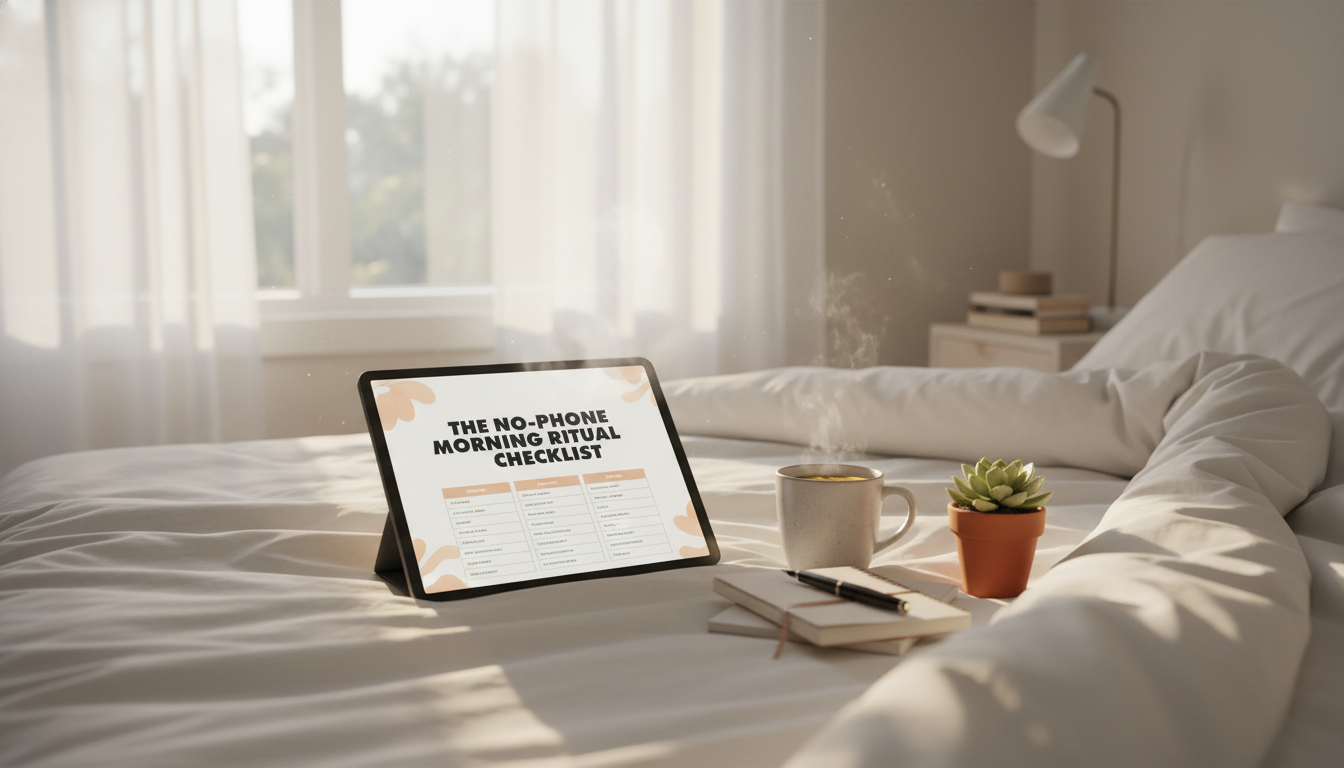
The No-Phone Morning Ritual Checklist: Reset Your Mind Before You Scroll
Mornings set the tone for attention, mood, and follow-through. A no-phone start creates a buffer between sleep and the day’s inputs, helping the mind wake up without immediately absorbing notifications, headlines, and other people’s priorities. This printable checklist is a simple structure for a calmer, clearer first hour—flexible enough for busy days and steady enough to become a habit.
Why a no-phone start feels different
- Protects the first minutes of the day from rapid context-switching (messages, news, social feeds).
- Builds a small “pause” between waking and reacting, making choices feel more intentional.
- Supports a calmer nervous system by reducing immediate stimulation and comparison loops.
- Creates space for basic needs first: hydration, light movement, and mental clarity.
If you’ve ever noticed how quickly your brain goes from sleepy to stressed after opening an app, you’re not imagining it. Bright screens and stimulating content can nudge the body toward “go mode” before you’ve even grounded yourself. For a deeper look at how light exposure can affect sleep-wake rhythms, see Harvard Health Publishing — Blue light has a dark side.
What the checklist includes (and how to use it)
- A printable, tick-box routine designed for the first 15–60 minutes after waking.
- A simple order of actions: body → environment → mind → plan.
- Use it daily, or keep it as a reset tool for high-stress weeks.
- Print one sheet repeatedly, or place it in a binder and mark it with a dry-erase sleeve.
- Keep the phone out of reach (drawer, another room, or airplane mode) until the checklist is complete.
If you want a ready-to-go format you can keep on the nightstand or kitchen counter, The No-Phone Morning Ritual Checklist (digital download) is designed to reduce decision fatigue—so you don’t have to “figure out” a routine while you’re still waking up.
The ritual in 3 time options
Choose a time box that fits the day; consistency matters more than length. If mornings are unpredictable, use the shortest version and return to longer versions on weekends. Pair the routine with a physical cue: a glass of water on the nightstand, or the checklist placed where you’ll see it before you reach for your phone.
No-phone morning options
| Time | Checklist focus | Example steps | When it’s best |
|---|---|---|---|
| 5–10 minutes | Stabilize and orient | Water + open curtains + 5 slow breaths + quick tidy | Rushed mornings, travel, low-energy days |
| 15–30 minutes | Clear mind + gentle momentum | Water + light stretch + wash up + jot priorities + protein snack | Most weekdays |
| 45–60 minutes | Deep reset + intention | Water + walk/yoga + journaling + review calendar + plan first task | Weekends, creative workdays, burnout recovery |
Checklist flow: body → environment → mind → plan
Body: meet the basics first
Start with hydration, daylight, and 2–5 minutes of movement to reduce grogginess. Even gentle actions—neck rolls, ankle circles, a short stretch—tell the body you’re safe and awake. If stress has been running high lately, it may help to remember that stress isn’t “just mental”; it has real effects on the body’s systems. The American Psychological Association — Stress effects on the body offers a clear overview.
Environment: reduce visual noise
Make the bed or clear one surface (bathroom counter, kitchen island, desk). The goal isn’t perfection—it’s removing tiny friction points that invite distraction. A calmer space can make it easier to stay off your phone because your surroundings feel “handled.” If you enjoy a simple focal point for your morning corner, a small decor piece can help your brain associate that spot with calm; the Elegant Ceramic Dress Form Vase can be used as a visual anchor on a shelf or dresser near your checklist.
Mind: slow the rush
Choose one: brief breathing, gratitude, journaling, or a short meditation. The point is to interrupt the mental sprint that often begins the moment you see alerts. Five slow breaths or a three-line journal entry is enough to create steadiness and perspective.
Plan: prevent a reaction-based day
Write 1–3 priorities and the first tiny step. “Tiny” might be: open the document, pack the lunch, reply to the one important email (not the whole inbox). This keeps your day from being shaped entirely by incoming messages.
Finish line: then check the phone
Make it easier: setup ideas the night before
If your mornings often include cold hands or a hard time warming up, consider pairing the no-phone routine with a simple warmth ritual (tea, warm water wash, quick walk). Cold Hands, Warm Clues (digital wellness guide) can be a helpful companion for building cozy, body-first momentum before screens.
Common obstacles (and small fixes)
Digital download tips for printing and reusing
If you’re also improving your overall sleep habits, the CDC — Sleep and Sleep Disorders (Sleep Hygiene) provides practical guidance that pairs well with a calmer, screen-delayed morning.
A gentle next step after the checklist
FAQ
How long should a no-phone morning ritual be?
It can be as short as 5–10 minutes or as long as 45–60 minutes, depending on your schedule. Consistency matters more than duration, so starting small and repeating it daily tends to work best.
What if the phone is needed for work or family emergencies?
Keep calls and essential texts available, but delay social and news apps until after the checklist. A defined check window right after the routine helps you stay reachable without starting the day in reactive mode.
Is this checklist good for beginners who struggle with scrolling?
Yes—printed, step-by-step actions reduce decision fatigue and make it easier to follow through when willpower is low. Place the checklist near the phone and use airplane mode (or move social apps off the home screen) until you finish.
Recommended for you



Amore in Bloom: D&G White Tee with Black Roses
May 23, 2026












Leave a comment