-
Shop
- Adidas
- Advanced Technologies
- AI Skills
- AI Skills Mastery 2026 Collection
- Bathroom
- Best-Sellers
- Calvin Klein
- Car Accessories
- Confidence
- Dating & Social Skills
- Digital Resources
- AI & Technology
- Beauty
- Car Buying & Ownership
- Cozy Feast Collection
- Electronics & Technology
- Financial Education
- Hobbies
- Home Styling & Organization
- Kitchen & Recipes
- Mindset
- Online Business
- Parenting & Child Development
- Personal Style & Fashion
- Pet Lifestyle & Wellness
- Smart Life with AI
- Travel Planning
- Wellness
- Yoga & Fitness
- Education & Learning
- Family & Parenting
- Fashion
- Alexander McQueen
- Bags
- Bags & Wallets
- Balenciaga
- Belts
- Blazers
- Blouses & Shirts
- Bottega Veneta
- Brunello Cucinelli
- Burberry
- Chanel
- Chloé
- Dior
- Dolce & Gabbana
- Dresses
- Etro
- Fendi
- Gucci
- Hats & Hair Accessories
- Jacquemus
- Jewelry
- Jil Sander
- Keychains
- Kiton
- Luggage
- Luggage Bags
- Miu Miu
- Off-White
- Outerwear
- Prada
- Rick Owens
- Saint Laurent
- Scarves
- Shoes
- Socks & Tights
- Sunglasses
- The Row
- Tom Ford
- Valentino
- Valentino Garavani
- Versace
- Vivienne Westwood
- Watches
- Fashion Accessories
- Furniture
- Gadgets
- Health & Beauty
- Health & Wellness
- Home & Garden
- Home Decor
- Home Electronics
- Home Supplies
- Kids & Babies
- Kitchen
- Kitchen Best-Sellers
- Lighting
- Online Business for Beginners
- Patio, Lawn & Garden
- Personal Growth
- Pet Care
- Pet Supplies
- Pets
- Smart Amazon Shopping
- Smart Home Living Guides
- Sport & Outdoors
- Stress Relief & Relaxation
- Super Deals
- TikTok Growth & Monetization Mastery
- Travel
- Travel & Adventure
- Wealth
- Wealth Building
- Budgeting & Saving
- Cryptocurrency Investing
- Debt Management
- Entrepreneurship & Business Growth
- Family Finance & Budgeting
- Financial Independence
- Financial Mindset & Psychology
- Financial Planning
- Frugal Living & Expense Hacks
- Goal Setting
- High-Income Skills
- Investing Basics
- Leadership
- Motivation
- Networking & Mentorship
- Passive Income Strategies
- Real Estate Investing
- Side Hustles
- Stock Market Investing
- Popular
- Best deals
- Blog
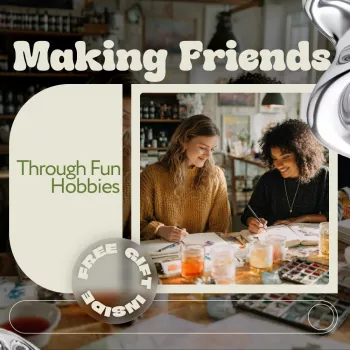
Make Friends Faster with Fun Hobbies (Digital Guide)

Making Friends Through Fun Hobbies: A Practical Digital Guide to Finding Your People
Friendships form faster when there’s a shared activity, a natural reason to meet again, and a low-pressure way to talk while doing something enjoyable. Hobbies create that “built-in reason” to show up, plus an endless supply of conversation starters—progress, gear, goals, and the funny mistakes that everyone makes while learning. The best part: you don’t have to be naturally outgoing to build real connections; you just need repeat contact and a simple plan.
Why hobbies make friendships easier than “just socializing”
Unstructured socializing can feel like walking into a room and trying to perform. A hobby flips the script: you’re not there to impress anyone—you’re there to do a thing.
- Shared structure reduces awkwardness: a class, club, or meetup gives you a reason to be there and something to focus on.
- Repeated exposure builds trust: familiar faces become friendly faces, then friends, through consistent contact.
- A hobby supplies ready conversation: “How long have you been doing this?” is easier than forcing small talk.
- Low-pressure bonding happens side-by-side: walking, crafting, or gaming keeps conversation light and natural.
- Welcoming norms are common: many groups expect newcomers and have routines for including them.
Research consistently ties social connection to well-being, and long-running work like the Harvard Study of Adult Development highlights relationships as a major contributor to life satisfaction over time.
Hobbies that naturally create connection (and why they work)
Not every hobby is equally “friendship-friendly.” The sweet spot is group-based, beginner-tolerant, and recurring. Here are hobby categories that tend to produce fast, genuine connection:
- Group movement: beginner sports leagues, dance classes, hiking or walking clubs. Shared effort creates quick camaraderie.
- Creative circles: pottery, knitting, drawing meetups, book clubs. Hands stay busy, which makes conversation less intense.
- Learning communities: language exchanges, coding study groups, cooking classes. Collaboration and mutual help happen organically.
- Volunteering-based hobbies: community gardens, animal shelters, event crews. A shared purpose is an instant bridge.
- Games and play: board game nights, TTRPGs, trivia teams. Clear rules and roles reduce social guesswork.
- Music and performance: choir, community theater, jam sessions. Rehearsals create regular contact and shared milestones.
If you want a snapshot of why connection matters at a population level, Our World in Data compiles helpful context on loneliness and social ties.
Quick-start: choose a hobby that fits your energy and lifestyle
The “best” hobby is the one you’ll actually show up for. Consistency does more for friendship than charisma.
- Pick the pace: weekly recurring groups tend to create friendships faster than one-off workshops.
- Match your social battery: try “parallel play” hobbies (crafting, walking) for lower pressure, or discussion-heavy groups (book clubs, improv) for higher interaction.
- Prioritize beginner-friendly formats: look for “intro,” “101,” “all levels,” and meetups that explicitly welcome newcomers.
- Consider logistics: location, time, cost, equipment, and accessibility determine whether you’ll return.
- Aim for a two-group rule: try two groups for the same hobby to find the best vibe.
| Hobby type | Best for | Typical conversation starters | How friendships usually form |
|---|---|---|---|
| Walking/hiking clubs | Low-pressure chats | Routes, shoes, local spots | Side-by-side talk over repeated walks |
| Classes (cooking, pottery, dance) | Meeting new people fast | Techniques, progress, recommendations | Seeing the same faces weekly + shared milestones |
| Volunteer groups | Purpose-driven connection | The cause, roles, upcoming events | Teamwork + gratitude + repeat shifts |
| Game nights (board/TTRPG/trivia) | Built-in social structure | Rules, strategies, favorite games | Regular sessions create inside jokes and teamwork |
| Book clubs/language exchanges | Discussion-oriented friendships | Themes, opinions, learning tips | Deeper conversations over recurring meetings |
Social skills that help hobby acquaintances become friends
You don’t need a new personality—just a few repeatable habits that make people feel recognized and safe around you.
- Use the “name + detail” habit: learn names early and attach one small detail (their project, favorite trail, role).
- Ask process questions: “How did you get into this?” and “What’s been hardest to learn so far?” invite real stories.
- Offer small, specific help: share a resource, explain a rule, or celebrate progress without overstepping.
- Create light continuity: reference a prior detail (“How did your sourdough attempt go?”) to signal genuine interest.
- Share in small steps: one brief personal detail related to the hobby encourages reciprocity without oversharing.
Turning meetups into real friendships (without making it weird)
Common roadblocks and gentle fixes
Digital guide download: make a plan and start showing up
If decision fatigue or overthinking is slowing you down, a focused plan helps. The Making Friends Through Fun Hobbies digital guide download is designed to help narrow hobby options, map where to meet people, and practice simple conversation routines that feel natural.
- Use a 14-day experiment: choose one hobby group, attend twice, and track comfort, enjoyment, and connections made.
- Set a measurable goal: learn 3 names, have 2 short conversations, and schedule 1 follow-up touchpoint.
- Boost follow-through: if motivation is low, pair the plan with The No-Phone Morning Ritual Checklist to reduce autopilot scrolling and make it easier to actually get out the door.
For more on why connection matters for mental health, the American Psychological Association outlines how social connection supports resilience and well-being.
FAQ
What are the best hobbies for making friends?
The best options are beginner-friendly, recurring, and group-based—like walking clubs, weekly classes (dance, cooking, pottery), volunteering shifts, game nights, and book clubs. The hobby matters less than the routine: repetition plus a shared activity creates comfort and real conversation over time.
How can hobbies help people make friends?
Hobbies create shared identity and repeated contact, give you easy conversation topics, and often involve teamwork or mutual help. Start by showing up consistently, learning a few names, having short “process” conversations, and then making one low-stakes invitation tied to the next session.














Leave a comment