-
Shop
- Adidas
- Advanced Technologies
- AI Skills
- AI Skills Mastery 2026 Collection
- Bathroom
- Best-Sellers
- Calvin Klein
- Car Accessories
- Confidence
- Dating & Social Skills
- Digital Resources
- AI & Technology
- Beauty
- Car Buying & Ownership
- Cozy Feast Collection
- Electronics & Technology
- Financial Education
- Hobbies
- Home Styling & Organization
- Kitchen & Recipes
- Mindset
- Online Business
- Parenting & Child Development
- Personal Style & Fashion
- Pet Lifestyle & Wellness
- Smart Life with AI
- Travel Planning
- Wellness
- Yoga & Fitness
- Education & Learning
- Family & Parenting
- Fashion
- Alexander McQueen
- Bags
- Bags & Wallets
- Balenciaga
- Belts
- Blazers
- Blouses & Shirts
- Bottega Veneta
- Brunello Cucinelli
- Burberry
- Chanel
- Chloé
- Dior
- Dolce & Gabbana
- Dresses
- Etro
- Fendi
- Gucci
- Hats & Hair Accessories
- Jacquemus
- Jewelry
- Jil Sander
- Keychains
- Kiton
- Luggage
- Luggage Bags
- Miu Miu
- Off-White
- Outerwear
- Prada
- Rick Owens
- Saint Laurent
- Scarves
- Shoes
- Socks & Tights
- Sunglasses
- The Row
- Tom Ford
- Valentino
- Valentino Garavani
- Versace
- Vivienne Westwood
- Watches
- Fashion Accessories
- Furniture
- Gadgets
- Health & Beauty
- Health & Wellness
- Home & Garden
- Home Decor
- Home Electronics
- Home Supplies
- Kids & Babies
- Kitchen
- Kitchen Best-Sellers
- Lighting
- Online Business for Beginners
- Patio, Lawn & Garden
- Personal Growth
- Pet Care
- Pet Supplies
- Pets
- Smart Amazon Shopping
- Smart Home Living Guides
- Sport & Outdoors
- Stress Relief & Relaxation
- Super Deals
- TikTok Growth & Monetization Mastery
- Travel
- Travel & Adventure
- Wealth
- Wealth Building
- Budgeting & Saving
- Cryptocurrency Investing
- Debt Management
- Entrepreneurship & Business Growth
- Family Finance & Budgeting
- Financial Independence
- Financial Mindset & Psychology
- Financial Planning
- Frugal Living & Expense Hacks
- Goal Setting
- High-Income Skills
- Investing Basics
- Leadership
- Motivation
- Networking & Mentorship
- Passive Income Strategies
- Real Estate Investing
- Side Hustles
- Stock Market Investing
- Popular
- Best deals
- Blog
Kids Spending Checklist: Simple Allowance & Money Skills
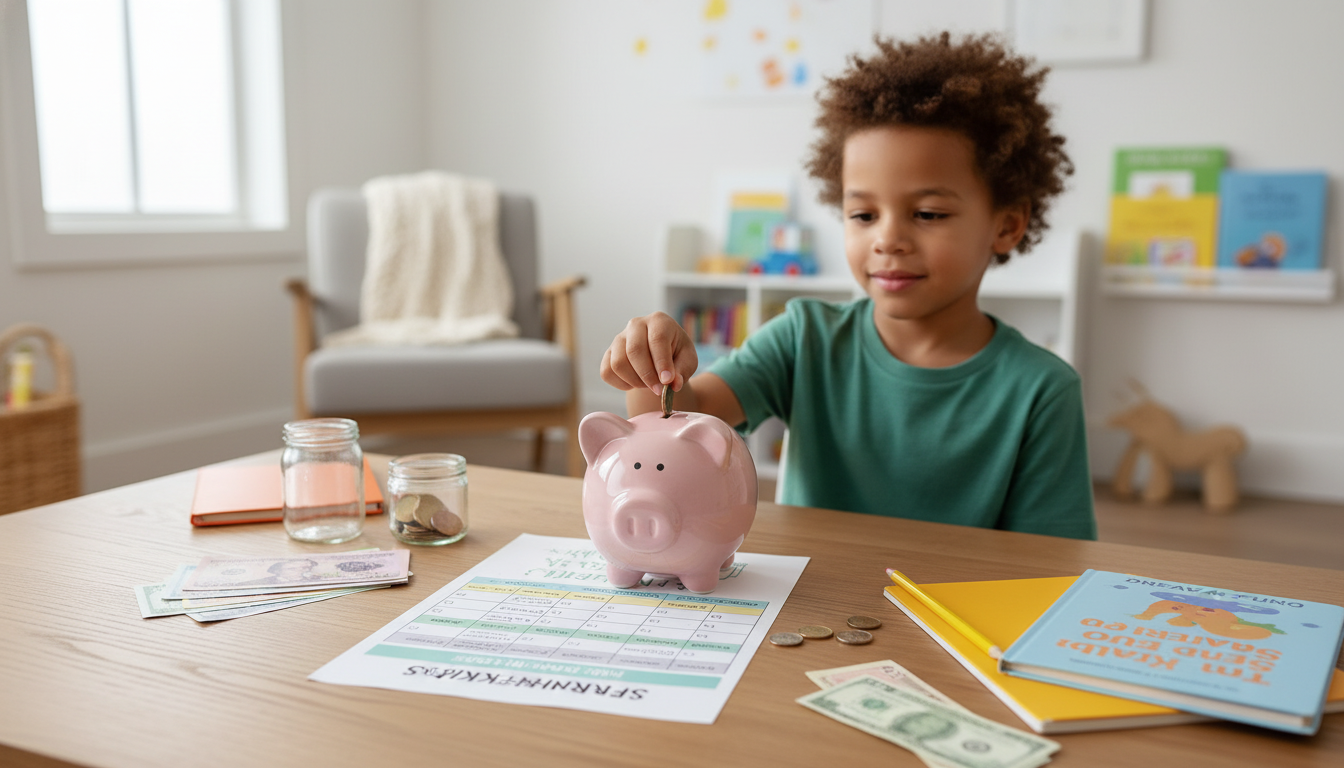
Spending Habits Checklist for Kids: A Simple Allowance Routine and Minimalist Money Guide
Healthy money habits start with small, repeatable choices: pause before buying, name what matters, and give every dollar a job. A kid-friendly checklist makes those choices visible and consistent—especially when allowance and spending requests show up during busy weeks. This guide lays out a minimalist, low-drama routine families can use to help kids practice saving, spending, and giving with confidence.
What “good spending habits” look like for kids
“Good” doesn’t mean never buying fun things. It means learning a simple decision pattern kids can repeat anywhere—at the store, online, or when a friend suggests buying something on the spot.
- Spending with a pause: waiting a set amount of time before buying (even 10 minutes) to reduce impulse decisions.
- Naming the category: needs (school supplies), wants (toys), goals (saving for a bigger item), and giving (gifts or donations).
- Checking the balance first: counting cash or reviewing a simple tracker before saying yes to a purchase.
- Comparing options: choosing between two items, sizes, or stores to learn trade-offs without overwhelm.
- Reflecting after buying: a quick “Was it worth it?” moment to connect feelings to decisions.
For age-based skill ideas, the CFPB’s Money as You Grow activities are a solid reference point, and Jump$tart’s National Standards show how these skills build over time.
How to use a spending checklist without turning it into a lecture
A checklist works best when it’s fast, predictable, and kid-led. The goal is to replace debating with a routine.
- Keep it short: 5–7 checkboxes is usually enough for kids to complete independently.
- Use it at the moment of temptation: before store checkouts, online carts, and allowance payday.
- Choose a “family rule” for one week at a time: example: 24-hour wait for purchases over $10.
- Let kids lead the process: they read the checklist aloud, mark boxes, and decide the outcome.
- Praise the process, not the purchase: highlight using the checklist, waiting, or comparing prices.
Quick decision checklist (kid-friendly)
| Step | Question to ask | Simple action |
|---|---|---|
| 1 | Do I really want this, or am I bored/hungry/tired? | Take a 5-minute break |
| 2 | Is this a need, a want, a goal, or giving? | Circle one category |
| 3 | Do I have enough money for it? | Count cash / check tracker |
| 4 | Is there a cheaper or better option? | Compare 2 choices |
| 5 | Will I still want it tomorrow? | Set a timer: 24 hours (or bedtime) |
| 6 | If I buy this, what am I not buying? | Name the trade-off |
| 7 | How do I feel after buying? | Rate it 1–5 |
If you want a ready-to-print page that keeps the steps consistent during real-life shopping moments, use the Spending Habits Checklist for Kids printable as a simple “same words every time” tool.
Allowance made simple: structure that teaches, not controls
Allowance works best when it’s predictable and boring—in a good way. Kids learn faster when the system doesn’t change every week.
- Pick a predictable schedule: weekly works well for younger kids; biweekly can work for older kids.
- Separate “earning” from “learning”: chores can be family responsibilities, while allowance can be a learning tool; choose one clear approach to avoid confusion.
- Use a three-bucket approach: Spend / Save / Give—physical jars or a simple tracker page.
- Set one rule for each bucket: Spend is for small wants, Save is for a goal, Give is for kindness (any amount).
- Introduce a “family contribution” only if needed: a small optional share toward shared experiences can teach planning without feeling like a tax.
A helpful rhythm: allowance day → quick balance check → choose one small planned “Spend” item (if they want) → put the rest into Save/Give. That planned purchase reduces the constant “Can I get this?” pressure during the week.
Minimalist spending skills kids can practice every week
Minimalist money habits aren’t about guilt; they’re about reducing noise. Fewer decisions, fewer impulse triggers, and more confidence when kids do spend.
- The one-in, one-out habit: when a new toy comes in, one item gets donated or stored to reduce clutter-driven buying.
- The “favorites list” rule: add wants to a list; buy only items that stay on the list for a set time.
- Cost per use (kid version): “How many times will I use this?”—aim for purchases that get repeated use.
- Experience-first thinking: choose one small experience (movie night, library trip) before buying another item.
- Packaging awareness: choose items with less waste when possible; connect spending to values without guilt.
For many kids, impulse spending spikes when attention is scattered. A simple screen-free start can make decision-making calmer later in the day; the No-Phone Morning Ritual Checklist can pair well with a “pause before buying” family rule.
A 10-minute weekly money check-in for families
Keep it short enough that you’ll actually do it. Ten minutes is plenty when the routine is consistent.
Common spending battles—and simple fixes
FAQ
What age should kids start using a spending checklist?
A simple version can work in early elementary (with short prompts or pictures), then you can add steps like trade-offs, waiting periods, and comparison shopping as attention span and math skills grow.
Should allowance be tied to chores?
Either approach can work: allowance can be a learning tool that’s not tied to chores, or you can pay for specific extra jobs. Keeping core family responsibilities separate helps the system stay consistent.
How can a minimalist approach reduce impulse spending for kids?
Minimalist routines reduce “buy-now” pressure by limiting choices and adding friction: waiting rules, a favorites list, and one-in-one-out keep wants visible without turning every moment into a purchase decision.















Leave a comment