-
Shop
- Adidas
- Advanced Technologies
- AI Skills
- AI Skills Mastery 2026 Collection
- Bathroom
- Best-Sellers
- Calvin Klein
- Car Accessories
- Confidence
- Dating & Social Skills
- Digital Resources
- AI & Technology
- Beauty
- Car Buying & Ownership
- Cozy Feast Collection
- Electronics & Technology
- Financial Education
- Hobbies
- Home Styling & Organization
- Kitchen & Recipes
- Mindset
- Online Business
- Parenting & Child Development
- Personal Style & Fashion
- Pet Lifestyle & Wellness
- Smart Life with AI
- Travel Planning
- Wellness
- Yoga & Fitness
- Education & Learning
- Family & Parenting
- Fashion
- Alexander McQueen
- Bags
- Bags & Wallets
- Balenciaga
- Belts
- Blazers
- Blouses & Shirts
- Bottega Veneta
- Brunello Cucinelli
- Burberry
- Chanel
- Chloé
- Dior
- Dolce & Gabbana
- Dresses
- Etro
- Fendi
- Gucci
- Hats & Hair Accessories
- Jacquemus
- Jewelry
- Jil Sander
- Keychains
- Kiton
- Luggage
- Luggage Bags
- Miu Miu
- Off-White
- Outerwear
- Prada
- Rick Owens
- Saint Laurent
- Scarves
- Shoes
- Socks & Tights
- Sunglasses
- The Row
- Tom Ford
- Valentino
- Valentino Garavani
- Versace
- Vivienne Westwood
- Watches
- Fashion Accessories
- Furniture
- Gadgets
- Health & Beauty
- Health & Wellness
- Home & Garden
- Home Decor
- Home Electronics
- Home Supplies
- Kids & Babies
- Kitchen
- Kitchen Best-Sellers
- Lighting
- Online Business for Beginners
- Patio, Lawn & Garden
- Personal Growth
- Pet Care
- Pet Supplies
- Pets
- Smart Amazon Shopping
- Smart Home Living Guides
- Sport & Outdoors
- Stress Relief & Relaxation
- Super Deals
- TikTok Growth & Monetization Mastery
- Travel
- Travel & Adventure
- Wealth
- Wealth Building
- Budgeting & Saving
- Cryptocurrency Investing
- Debt Management
- Entrepreneurship & Business Growth
- Family Finance & Budgeting
- Financial Independence
- Financial Mindset & Psychology
- Financial Planning
- Frugal Living & Expense Hacks
- Goal Setting
- High-Income Skills
- Investing Basics
- Leadership
- Motivation
- Networking & Mentorship
- Passive Income Strategies
- Real Estate Investing
- Side Hustles
- Stock Market Investing
- Popular
- Best deals
- Blog
Instagram Growth for Beginners: 7-Day Algorithm Sprint

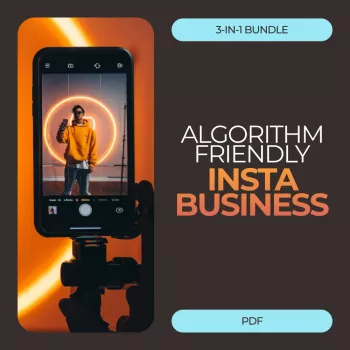
Algorithm-Friendly IG Business Growth Pack: A Beginner’s Playbook for Sustainable Instagram Growth
Instagram growth gets simpler when the focus shifts from “going viral” to building repeatable signals the platform can measure: retention, meaningful interactions, and clear topic consistency. The goal isn’t to chase trends nonstop—it’s to create content that people actually finish, save, share, and use. That combination gives Instagram more confidence about who should see your posts next. For more guidance, see Systematic Review on SEO and Digital Marketing Strategies for ….
If you want a structured way to turn these principles into a weekly routine, the Algorithm-Friendly IG Business Growth Pack – Instagram Algorithm Tips for Beginners is designed to run like a 7-day sprint you can repeat. For further reading, see Depth-First Search and Linear Graph Algorithms | SIAM Journal on ….
How Instagram decides what to show (in plain language)
Instagram ranks content by predicting what someone will do next: watch longer, rewatch, save, share, comment, tap to your profile, or simply linger. Those actions signal “this was worth their time,” which helps distribution.
- Reels lean heavily on retention (watch time, replays) and clean pacing. If people drop off early, reach often stalls.
- Feed posts (especially carousels) tend to benefit from saves, shares, and dwell time—people pausing and swiping through.
- Stories prioritize relationship signals: replies, taps, sticker interactions, and repeat viewers.
Topic consistency is the quiet multiplier. When you repeat themes, formats, and outcomes, Instagram learns who responds well—and it can recommend your content more accurately. Early performance matters too, but “early” can mean hours to a couple of days. Strong packaging (hook, cover, caption) keeps your post in the test longer.
For official feature guidance and platform best practices, refer to Instagram Creators and the Instagram Help Center.
Set up growth foundations before posting more
Posting more isn’t the fix if your account doesn’t quickly answer: “Who is this for, and what do I get here?” Set the base first so every post has a higher chance of converting new reach into follows.
- Choose one primary audience and one primary outcome: education, inspiration, entertainment, or product solutions.
- Polish your profile fast: use the name field to say what you do; write a bio that states who you help + the result; point your link to one focused destination.
- Create 3–5 content pillars (repeatable themes). New visitors should instantly understand your lane.
- Pin three posts like a welcome mat: a quick intro, a best “how-to” or transformation, and a proof/portfolio post.
- Highlights should answer frequent questions with simple labels: Pricing, Start Here, Tips, Results, FAQ.
Small clarity upgrades make every future post work harder—especially when someone taps your profile after a Reel or share.
Content that earns reach: design for retention, then saves and shares
The simplest content advantage is designing for one primary response per post: finish watching, save it, or share it. That starts with clarity.
Reels: keep the promise and cut the friction
- Open with the result in the first second (the promise), not the backstory.
- Tight cuts beat long ramps. Remove filler and repeated phrases.
- Build to a payoff: a final reveal, a checklist, a before/after, or a “do this next” step.
Carousels: swipe logic wins
- First slide: call out the pain point or outcome with readable text.
- One idea per slide so swiping feels easy and fast.
- Final slide: a “save for later” summary (mini checklist or steps recap).
Captions: make the next action obvious
- Front-load context: what this is and who it’s for.
- Add simple steps people can try immediately.
- Use one direct CTA aligned to your goal (comment, save, DM, or share)—not all four.
Strong lighting, readable on-screen text, and a single main idea often outperform “fancier” posts with mixed messages. Hashtags and keywords can help categorization, but they’re support—not the engine. Comprehension comes first.
Engagement that feels natural (and still signals quality)
If you’re trying to stay consistent without burning out, pairing a posting plan with a focus routine can help. The No-Phone Morning Ritual Checklist is a quick reset to reduce reactive scrolling and protect your creative time before you start posting or engaging.
A beginner weekly posting plan (simple, measurable, repeatable)
| Day | Post Type | Topic Focus | Goal | Call-to-Action |
|---|---|---|---|---|
| Mon | Carousel | Pillar #1: Beginner steps | Saves | “Save this checklist” |
| Tue | Stories (5–10 frames) | Behind-the-scenes + poll | Replies/interaction | “Vote + tell why” |
| Wed | Reel | Quick win tutorial | Retention + shares | “Send to a friend who needs this” |
| Thu | Stories | Q&A box | DMs + insights | “Ask one question” |
| Fri | Carousel | Common mistakes + fixes | Saves | “Comment which one you’ll fix” |
| Sat | Reel | Proof/process (before/after, case snippet) | Trust + follows | “Follow for part 2” |
| Sun | Stories | Weekly recap + next week teaser | Return visits | “Want the template? DM ‘WEEK’” |
Using the Algorithm-Friendly IG Business Growth Pack as a 7-day sprint
When you want momentum fast, a sprint beats vague “post more” goals. Here’s a practical way to run the Algorithm-Friendly IG Business Growth Pack – Instagram Algorithm Tips for Beginners in a week:
Beginner mistakes that stall growth (and quick fixes)
FAQ
How often should a beginner post on Instagram to see growth?
A sustainable baseline is 3–5 posts per week plus Stories most days. Consistency and strong quality signals (retention, saves, shares) typically matter more than posting daily without a plan.
What matters more for reach: Reels or carousels?
Reels often expand reach through retention and recommendations, while carousels frequently earn saves and shares that support ongoing distribution. Choose one main format to master and use the other as support so your execution stays consistent.
Do hashtags still help beginners?
Hashtags can support categorization, but they’re not a shortcut. Clear content, readable visuals, topic consistency, and captions that explain what the post is about usually make a bigger difference.















Leave a comment