-
Shop
- Adidas
- Advanced Technologies
- AI Skills
- AI Skills Mastery 2026 Collection
- Bathroom
- Best-Sellers
- Calvin Klein
- Car Accessories
- Confidence
- Dating & Social Skills
- Digital Resources
- AI & Technology
- Beauty
- Car Buying & Ownership
- Cozy Feast Collection
- Electronics & Technology
- Financial Education
- Hobbies
- Home Styling & Organization
- Kitchen & Recipes
- Mindset
- Online Business
- Parenting & Child Development
- Personal Style & Fashion
- Pet Lifestyle & Wellness
- Smart Life with AI
- Travel Planning
- Wellness
- Yoga & Fitness
- Education & Learning
- Family & Parenting
- Fashion
- Alexander McQueen
- Bags
- Bags & Wallets
- Balenciaga
- Belts
- Blazers
- Blouses & Shirts
- Bottega Veneta
- Brunello Cucinelli
- Burberry
- Chanel
- Chloé
- Dior
- Dolce & Gabbana
- Dresses
- Etro
- Fendi
- Gucci
- Hats & Hair Accessories
- Jacquemus
- Jewelry
- Jil Sander
- Keychains
- Kiton
- Luggage
- Luggage Bags
- Miu Miu
- Off-White
- Outerwear
- Prada
- Rick Owens
- Saint Laurent
- Scarves
- Shoes
- Socks & Tights
- Sunglasses
- The Row
- Tom Ford
- Valentino
- Valentino Garavani
- Versace
- Vivienne Westwood
- Watches
- Fashion Accessories
- Furniture
- Gadgets
- Health & Beauty
- Health & Wellness
- Home & Garden
- Home Decor
- Home Electronics
- Home Supplies
- Kids & Babies
- Kitchen
- Kitchen Best-Sellers
- Lighting
- Online Business for Beginners
- Patio, Lawn & Garden
- Personal Growth
- Pet Care
- Pet Supplies
- Pets
- Smart Amazon Shopping
- Smart Home Living Guides
- Sport & Outdoors
- Stress Relief & Relaxation
- Super Deals
- TikTok Growth & Monetization Mastery
- Travel
- Travel & Adventure
- Wealth
- Wealth Building
- Budgeting & Saving
- Cryptocurrency Investing
- Debt Management
- Entrepreneurship & Business Growth
- Family Finance & Budgeting
- Financial Independence
- Financial Mindset & Psychology
- Financial Planning
- Frugal Living & Expense Hacks
- Goal Setting
- High-Income Skills
- Investing Basics
- Leadership
- Motivation
- Networking & Mentorship
- Passive Income Strategies
- Real Estate Investing
- Side Hustles
- Stock Market Investing
- Popular
- Best deals
- Blog
Get Kids to Clean Up: Calm Routines That Really Work
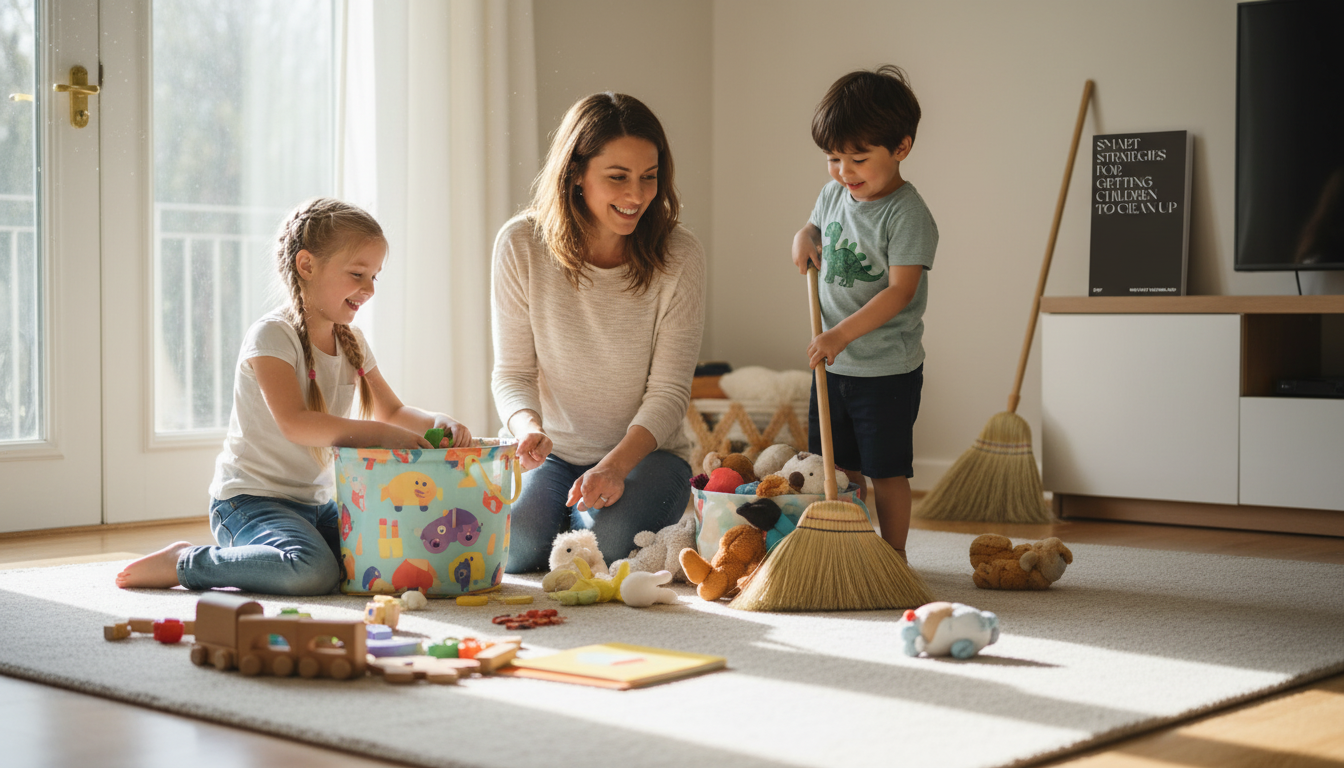
Smart Strategies for Getting Children to Clean Up (Without Power Struggles)
Tidying doesn’t have to turn into daily conflict. With a few small shifts—clear routines, child-friendly systems, and the right kind of encouragement—kids can learn to clean up with less resistance and more confidence. The goal isn’t a picture-perfect home; it’s a predictable “reset” that fits real family life and gets easier over time.
Why kids resist cleaning up
Before changing behavior, it helps to understand what’s driving the pushback. Most resistance isn’t laziness—it’s a mismatch between what adults expect and what kids can manage in the moment.
- The task feels too big: a messy room looks overwhelming, so avoidance feels easier.
- Unclear expectations: “clean your room” can mean ten different things to a child.
- Transition trouble: stopping play is hard, especially without warning.
- Skills gap: kids may not know where items belong or how to sort quickly.
- Control and autonomy: resistance can be a way to hold onto independence.
When you treat cleaning as a teachable skill—like tying shoes—power struggles drop. The focus shifts from “obey” to “build a routine you can succeed at.”
Set the stage: a clean-up system that actually works
The fastest way to reduce conflict is to reduce friction. If a room requires ten steps to put one toy away, most kids won’t do it consistently (and many adults won’t either).
- Reduce friction: fewer bins, bigger labels, and obvious “homes” for common items.
- Make putting away easier than leaving it out: open baskets for fast toss-in storage.
- Use zones: books, art, blocks, dress-up—each zone gets one container and one shelf spot.
- Keep “maybe” items in a limited-size donation box: this prevents clutter rebound.
- Aim for reset-friendly rooms: a 5–10 minute reset beats “perfect” every time.
Simple setups by age (starting point)
| Age range | What kids can handle | How to set it up | Parent role |
|---|---|---|---|
| 2–3 | Put toys into one or two bins; match picture labels | 2 large bins + picture labels; no lids | Do it together; give one-step directions |
| 4–6 | Sort by category; return items to labeled spots | 4–6 bins; shelf at child height; picture + word labels | Start the timer; coach and praise effort |
| 7–10 | Full room reset: floor clear, surfaces reset, laundry in hamper | Zone map; hamper + trash + “return to other room” basket | Spot-check and negotiate standards |
| 11+ | Maintain routines; manage personal clutter; plan weekly reset | Minimal containers; drawer dividers; donation rule | Agree on expectations; hold to consequences calmly |
Directions that reduce arguing
Many cleanup battles start with broad requests that feel confusing or impossible. Clear, short directions make success obvious and reduce the need for repeated reminders.
- Replace vague commands with “first/then” steps: “First books on the shelf, then blocks in the blue bin.”
- Use “when/then” language for transitions: “When the floor is clear, then screen time begins.”
- Offer two acceptable choices: “Do you want to start with clothes or toys?”
- Keep instructions short and neutral: long lectures often trigger shutdown.
- Ask for a quick repeat-back: “Tell me the first step so we’re on the same page.”
Tip: Give the first step only. Once that’s done, give the next step. This keeps the task from feeling like a mountain.
Motivation that builds positive habits (not bribes)
Motivation works best when it strengthens identity (“I can do hard things”) and routine (“we reset the room before dinner”), rather than turning every tidy-up into a negotiation. For guidance on effective praise, the American Psychological Association has a helpful overview of praise and positive reinforcement.
- Use immediate, specific feedback: “You put every marker back in the cup,” not just “Good job.”
- Try “tiny wins”: a 3-minute reset creates momentum and lowers dread.
- Make progress visible: a simple checklist or habit tracker reinforces consistency.
- Rotate responsibility: one “daily reset” job plus one “weekly reset” job prevents burnout.
- Keep rewards occasional and tied to family routines: movie night after a shared reset—not after every single pickup.
Positive discipline works best when expectations are clear and follow-through is calm and predictable. For additional support, see the American Academy of Pediatrics guidance on positive discipline.
What to do in the moment when kids refuse
Refusal is often a mix of overwhelm and big feelings. Instead of escalating, focus on helping your child re-enter the task with a smaller “on-ramp.”
Printable support for consistent routines
If a ready-to-use plan would help, consider Smart Strategies for Getting Children to Clean Up (printable parenting guide), designed to support calm follow-through and family-friendly motivation.
For parents who want to reduce morning chaos (which often spills into end-of-day cleanup stress), a small routine reset can help. The No-Phone Morning Ritual Checklist is a simple way to start the day with clearer focus before managing kids’ transitions and routines.
For broader, age-based parenting tips and developmental expectations, the CDC offers practical guidance in its Positive Parenting Tips.
FAQ
What age should kids start cleaning up?
Toddlers can start as early as age 2 with simple “toss it in the bin” cleanup, especially when you do it together. Match the task to development: fewer steps, bigger containers, and clear visuals first—then add sorting as they grow.
How can cleaning up work without yelling or constant reminders?
Use a consistent routine (same time, same steps), short timers, and simple, specific directions. Visual labels and checklists reduce repeating yourself, and calm follow-through with pre-agreed outcomes keeps the boundary clear.
What if my child melts down every time it’s time to tidy?
Give transition warnings, help with regulation first (quick break, water, breathing), then restart with a tiny step or two choices. Once calm returns, go back to the first clear step and keep the reset short.
















Leave a comment