-
Shop
- Adidas
- Advanced Technologies
- AI Skills
- AI Skills Mastery 2026 Collection
- Bathroom
- Best-Sellers
- Calvin Klein
- Car Accessories
- Confidence
- Dating & Social Skills
- Digital Resources
- AI & Technology
- Beauty
- Car Buying & Ownership
- Cozy Feast Collection
- Electronics & Technology
- Financial Education
- Hobbies
- Home Styling & Organization
- Kitchen & Recipes
- Mindset
- Online Business
- Parenting & Child Development
- Personal Style & Fashion
- Pet Lifestyle & Wellness
- Smart Life with AI
- Travel Planning
- Wellness
- Yoga & Fitness
- Education & Learning
- Family & Parenting
- Fashion
- Alexander McQueen
- Bags
- Bags & Wallets
- Balenciaga
- Belts
- Blazers
- Blouses & Shirts
- Bottega Veneta
- Brunello Cucinelli
- Burberry
- Chanel
- Chloé
- Dior
- Dolce & Gabbana
- Dresses
- Etro
- Fendi
- Gucci
- Hats & Hair Accessories
- Jacquemus
- Jewelry
- Jil Sander
- Keychains
- Kiton
- Luggage
- Luggage Bags
- Miu Miu
- Off-White
- Outerwear
- Prada
- Rick Owens
- Saint Laurent
- Scarves
- Shoes
- Socks & Tights
- Sunglasses
- The Row
- Tom Ford
- Valentino
- Valentino Garavani
- Versace
- Vivienne Westwood
- Watches
- Fashion Accessories
- Furniture
- Gadgets
- Health & Beauty
- Health & Wellness
- Home & Garden
- Home Decor
- Home Electronics
- Home Supplies
- Kids & Babies
- Kitchen
- Kitchen Best-Sellers
- Lighting
- Online Business for Beginners
- Patio, Lawn & Garden
- Personal Growth
- Pet Care
- Pet Supplies
- Pets
- Smart Amazon Shopping
- Smart Home Living Guides
- Sport & Outdoors
- Stress Relief & Relaxation
- Super Deals
- TikTok Growth & Monetization Mastery
- Travel
- Travel & Adventure
- Wealth
- Wealth Building
- Budgeting & Saving
- Cryptocurrency Investing
- Debt Management
- Entrepreneurship & Business Growth
- Family Finance & Budgeting
- Financial Independence
- Financial Mindset & Psychology
- Financial Planning
- Frugal Living & Expense Hacks
- Goal Setting
- High-Income Skills
- Investing Basics
- Leadership
- Motivation
- Networking & Mentorship
- Passive Income Strategies
- Real Estate Investing
- Side Hustles
- Stock Market Investing
- Popular
- Best deals
- Blog
Gentle Senior Yoga: 10–20 Min Routine for Balance
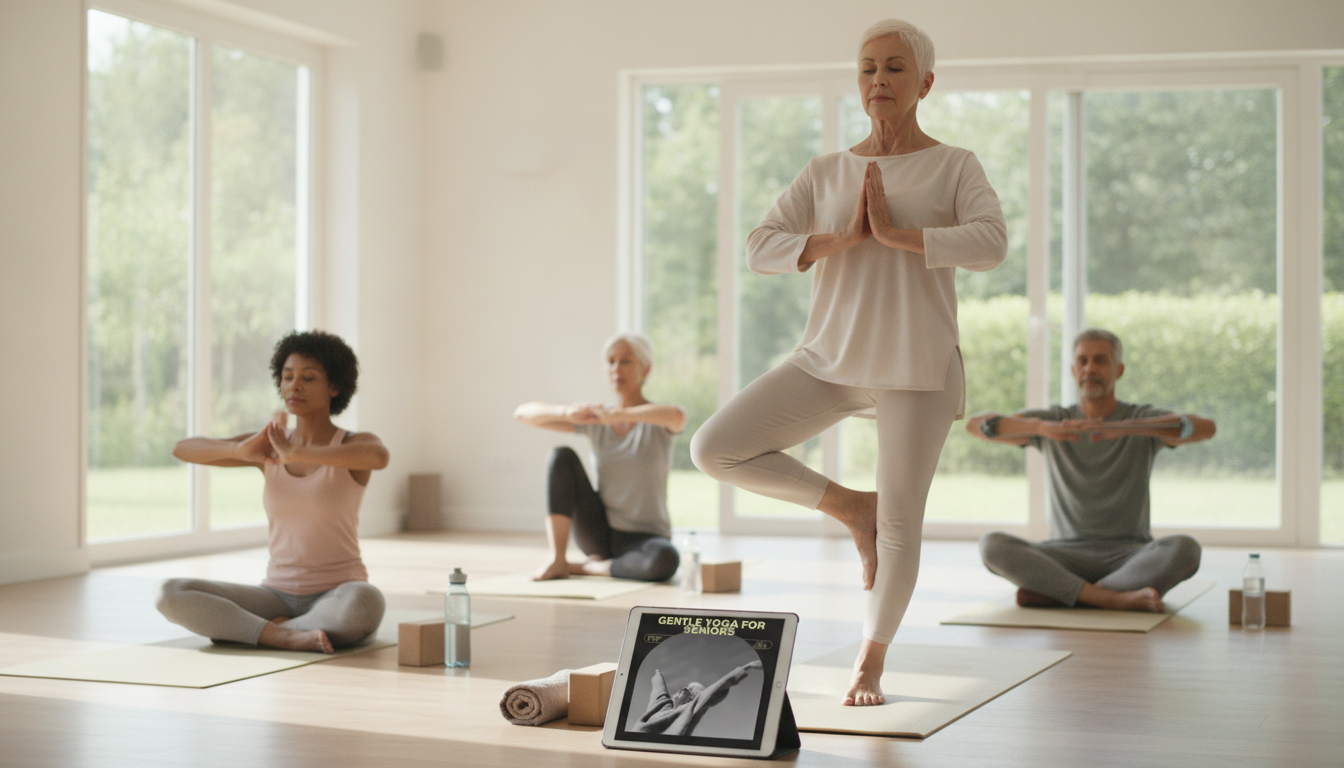
Gentle Yoga for Seniors: An Easy Daily Routine for Flexibility, Balance, and Relaxation
Gentle yoga can be a simple, enjoyable way to support daily mobility, steadier balance, and a calmer nervous system—without needing long workouts or complicated poses. A consistent routine matters more than intensity, especially for older adults who want safe movement, less stiffness, and a relaxing daily rhythm. Below is a straightforward checklist-style practice that can be done at home, adjusted to fit different energy levels, and repeated daily to build comfort and confidence over time.
For general activity guidance that complements light yoga, the CDC’s recommendations for older adults and the National Institute on Aging exercise resources are helpful reference points.
A safe foundation before starting
- Get medical clearance if there is a recent surgery, uncontrolled blood pressure, severe osteoporosis, dizziness/fainting, or new/unexplained pain.
- Use stable support: a sturdy chair (not rolling), a wall, and a non-slip mat or rug pad.
- Keep movements pain-free and slow; gentle stretching is fine, sharp pain or numbness is not.
- Breathe smoothly through the nose if possible; avoid holding the breath during effort.
- Consider practicing near a countertop or wall for balance-focused movements.
If a pose increases fear of falling, swap it for a supported version. Confidence and steadiness matter more than “getting deeper” into a stretch.
Your easy daily checklist (10–20 minutes)
Use this routine as a menu: pick the standing version on good days, switch to the chair version when energy is lower, and keep the overall pace unhurried.
- Start with a comfort check (30 seconds): notice how the neck, low back, hips, knees, and ankles feel today; choose chair-based options if needed.
- Warm up (2–4 minutes): gentle neck turns, shoulder rolls, wrist circles, ankle circles, and easy marching in place or seated marching.
- Mobility flow (4–7 minutes): cat-cow (seated or tabletop), gentle side bends, chest opener (hands behind back or clasped in front), and supported spinal twist (seated twist with soft range).
- Balance practice (2–4 minutes): heel-to-toe stance near a wall, single-leg stand with fingertips on a chair, or slow weight shifts side-to-side.
- Flexibility finish (2–4 minutes): hamstring stretch (seated with one leg extended), calf stretch at wall, and gentle hip opener (seated figure-four or ankle-on-knee only if comfortable).
- Relaxation (2–4 minutes): legs-up-the-chair (calves on seat) or a comfortable reclined rest; take 6–10 slow breaths and soften the jaw and shoulders.
| Step | Standing option | Chair option | Time |
|---|---|---|---|
| Warm-up | Easy march + shoulder rolls | Seated march + shoulder rolls | 2–4 min |
| Spine mobility | Wall cat-cow + side bend | Seated cat-cow + side bend | 3–5 min |
| Hips & legs | Supported hamstring/calf stretch | Seated hamstring + ankle circles | 2–4 min |
| Balance | Heel-to-toe + weight shifts (near wall) | Seated weight shifts + sit-to-stand practice | 2–4 min |
| Relaxation | Supported forward fold at chair | Seated breathing + body scan | 2–4 min |
Simple pose cues that keep it gentle
- Cat-cow (seated): hands on knees; inhale to lift chest and lengthen spine, exhale to round gently—keep the movement small and smooth.
- Supported twist (seated): sit tall; turn ribs slightly without forcing the neck; keep both sit bones grounded.
- Wall calf stretch: hands on wall, one foot back, heel heavy; bend front knee and keep back leg straight; stop before the Achilles feels strained.
- Chair-assisted balance: keep a “soft knee” and light fingertip support; aim for steadiness rather than duration.
- Relaxation breathing: inhale for 4, exhale for 6 (or any comfortable ratio) to encourage downshifting and ease.
Balance work is especially valuable as it supports everyday tasks (turning, reaching, stepping over thresholds). Harvard Health explains why it matters in The importance of balance exercises.
Modifications for common senior concerns
- Knee sensitivity: avoid deep bends; prioritize seated options and gentle hamstring/calf work; use a pillow under knees when reclining.
- Low back stiffness: keep twists small; emphasize pelvic tilts, seated cat-cow, and longer exhalations; avoid aggressive forward folds.
- Shoulder discomfort: reduce overhead movements; use wall-supported chest openers and small shoulder circles.
- Balance anxiety: practice next to a counter; keep toes pointed forward; start with weight shifts before single-leg work.
- Fatigue or low-energy days: do only warm-up + relaxation; consistency beats pushing through.
A weekly progression that stays enjoyable
Printable support to make the routine stick
Helpful digital downloads to support a steady routine
- Gentle Yoga for Seniors: Your Easy & Fun Daily Checklist (Printable Digital Download) — a simple, repeatable plan you can post where you’ll see it daily.
- The No-Phone Morning Ritual Checklist: Reset Your Mind Before You Scroll — pairs well with a short breathing practice to start the day calmer.
- Cold Hands, Warm Clues – Digital Guide to Cold Hands and Feet and Circulation Health — useful if chilly hands/feet or comfort concerns affect your motivation to move.
FAQ
How often should seniors do gentle yoga?
Most days is ideal if it stays comfortable; aim for 10–20 minutes. On low-energy days, do a shorter warm-up plus a few slow breaths to keep the habit consistent.
Is gentle yoga safe if balance is poor?
Yes with support: use a chair or wall, keep movements slow, and start with weight shifts before trying any single-leg stance. Skip any pose that causes wobbling or fear.
What time of day is best for a gentle yoga routine?
Morning can reduce stiffness, while evening can support relaxation and sleep. The best time is the one that feels sustainable and easy to repeat.
Recommended for you


Plaid for Winter 2026: Trend Colors & Easy Styling
Jun 12, 2026
Is an 8000Hz Mouse Worth It for Gaming?
Jun 13, 2026










Leave a comment