-
Shop
- Adidas
- Advanced Technologies
- AI Skills
- AI Skills Mastery 2026 Collection
- Bathroom
- Best-Sellers
- Calvin Klein
- Car Accessories
- Confidence
- Dating & Social Skills
- Digital Resources
- AI & Technology
- Beauty
- Car Buying & Ownership
- Cozy Feast Collection
- Electronics & Technology
- Financial Education
- Hobbies
- Home Styling & Organization
- Kitchen & Recipes
- Mindset
- Online Business
- Parenting & Child Development
- Personal Style & Fashion
- Pet Lifestyle & Wellness
- Smart Life with AI
- Travel Planning
- Wellness
- Yoga & Fitness
- Education & Learning
- Family & Parenting
- Fashion
- Alexander McQueen
- Bags
- Bags & Wallets
- Balenciaga
- Belts
- Blazers
- Blouses & Shirts
- Bottega Veneta
- Brunello Cucinelli
- Burberry
- Chanel
- Chloé
- Dior
- Dolce & Gabbana
- Dresses
- Etro
- Fendi
- Gucci
- Hats & Hair Accessories
- Jacquemus
- Jewelry
- Jil Sander
- Keychains
- Kiton
- Luggage
- Luggage Bags
- Miu Miu
- Off-White
- Outerwear
- Prada
- Rick Owens
- Saint Laurent
- Scarves
- Shoes
- Socks & Tights
- Sunglasses
- The Row
- Tom Ford
- Valentino
- Valentino Garavani
- Versace
- Vivienne Westwood
- Watches
- Fashion Accessories
- Furniture
- Gadgets
- Health & Beauty
- Health & Wellness
- Home & Garden
- Home Decor
- Home Electronics
- Home Supplies
- Kids & Babies
- Kitchen
- Kitchen Best-Sellers
- Lighting
- Online Business for Beginners
- Patio, Lawn & Garden
- Personal Growth
- Pet Care
- Pet Supplies
- Pets
- Smart Amazon Shopping
- Smart Home Living Guides
- Sport & Outdoors
- Stress Relief & Relaxation
- Super Deals
- TikTok Growth & Monetization Mastery
- Travel
- Travel & Adventure
- Wealth
- Wealth Building
- Budgeting & Saving
- Cryptocurrency Investing
- Debt Management
- Entrepreneurship & Business Growth
- Family Finance & Budgeting
- Financial Independence
- Financial Mindset & Psychology
- Financial Planning
- Frugal Living & Expense Hacks
- Goal Setting
- High-Income Skills
- Investing Basics
- Leadership
- Motivation
- Networking & Mentorship
- Passive Income Strategies
- Real Estate Investing
- Side Hustles
- Stock Market Investing
- Popular
- Best deals
- Blog
Elegant Metal Wall Hanging: Placement, Size & Finish Tips
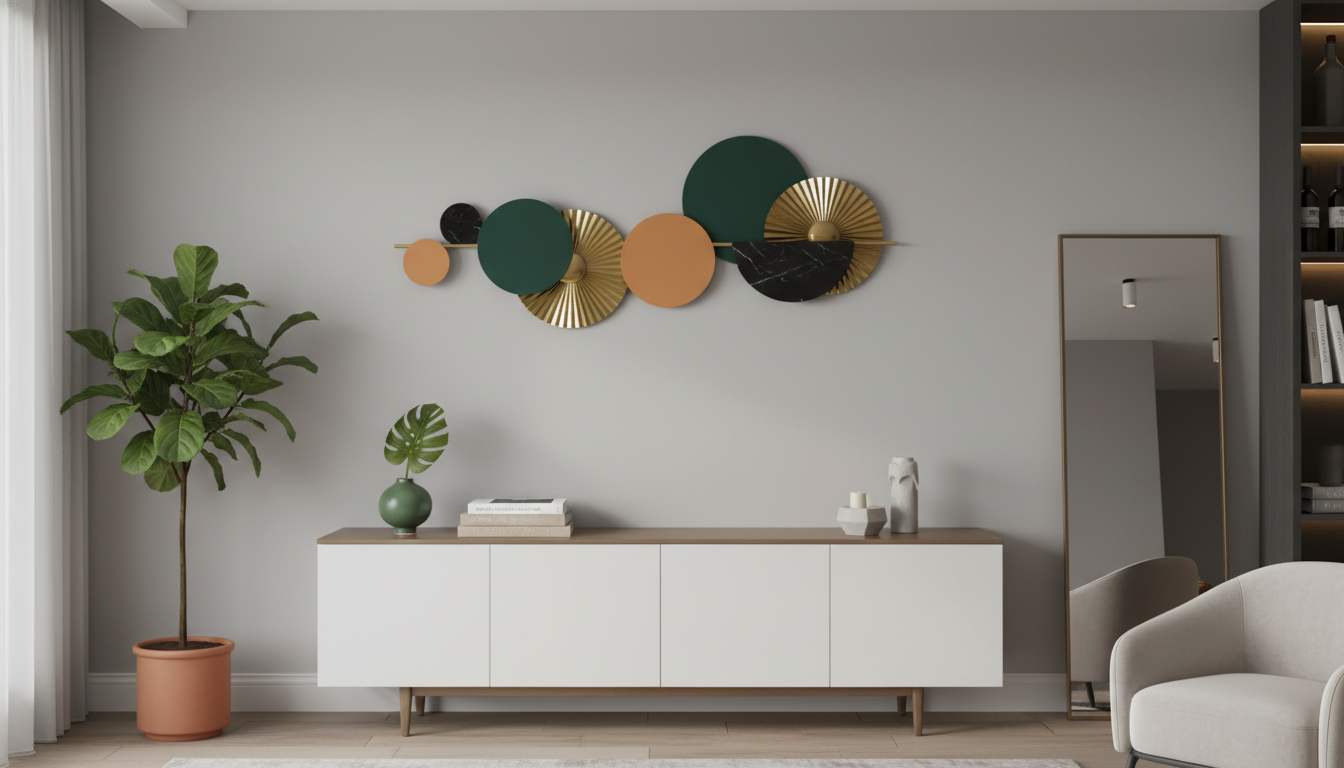
Elegant Metal Wall Hanging: A Sculptural Accent for Modern Rooms
An elegant metal wall hanging brings a kind of depth that flat prints often can’t: raised details, layered cutouts, and a light-catching surface that shifts throughout the day. The result is a wall feature that feels sculptural, polished, and intentional—especially when scale, finish, and placement are chosen with the room’s architecture and furnishings in mind.
What makes a metal wall hanging feel elegant
Elegance in metal wall decor usually comes down to restraint and refinement. The most elevated pieces feel cohesive from across the room and still look clean when viewed from an angle.
- Clean lines or balanced organic shapes that read as deliberate, not busy.
- A refined finish (matte black, brushed gold, antiqued bronze, or mixed metals) that complements nearby hardware and lighting.
- Depth and shadow play from raised elements, layered shapes, or cutouts that create movement as lighting changes.
- A cohesive silhouette that looks polished even when you’re not standing directly in front of it.
Where it works best: room-by-room placement ideas
Metal wall art is flexible, but it shines most where it can act like a visual “anchor”—a point the room naturally organizes around.
- Entryway: Place it above a narrow console to create an immediate focal point and set a curated tone.
- Living room: Center it over the sofa, keeping the bottom edge about 6–10 inches above the backrest for a grounded, designer-like look.
- Dining room: Hang it on the main wall or near a buffet; pair with warm lighting for a soft metallic glow.
- Bedroom: Position it above a headboard for a statement that feels calmer and cleaner than a cluster of smaller frames.
- Hallway or staircase: Use a larger piece to avoid a “floating” feel on long walls.
Sizing and spacing guide
Metal wall decor can look surprisingly airy due to open space and cutouts, so it often needs a touch more scale than you’d expect.
- Scale to furniture: Aim for the piece to be about two-thirds the width of the furniture beneath it (sofa, console, bed, buffet).
- Eye level rule: For standalone placement, center it around 57–60 inches from the floor (adjust for tall ceilings and sightlines).
- Breathing room: Leave 4–8 inches from molding, shelves, or adjacent decor to keep the look uncluttered.
- When in doubt, go slightly larger: Metal pieces often read lighter than framed art, even at the same dimensions.
Quick placement measurements
| Placement | Recommended center height | Typical gap from furniture |
|---|---|---|
| Above sofa | 57–60 in (145–152 cm) to center (adjust to room) | 6–10 in (15–25 cm) above backrest |
| Above console or buffet | 57–60 in (145–152 cm) to center (adjust to decor height) | 6–12 in (15–30 cm) above surface |
| Standalone on open wall | 57–60 in (145–152 cm) to center | N/A |
| Above headboard | Varies by headboard height | 6–10 in (15–25 cm) above headboard |
Choosing a finish that looks intentional
The finish is what makes metal wall decor feel integrated rather than “added on.” A simple rule: repeat what’s already in the room, then add a subtle contrast.
- Match, then vary: Echo one existing metal (lighting, cabinet pulls, mirror frame), then introduce a second metal in a smaller dose.
- Warm metals (gold/bronze): Soften cool palettes and pair beautifully with cream, tan, walnut, and terracotta.
- Cool metals (black/steel): Sharpen modern spaces and look crisp with white, gray, and deep jewel tones.
- Textured or antiqued finishes: Hide fingerprints and minor scuffs better than high-gloss surfaces.
Styling combinations that create a cohesive look
Metal wall art is easiest to style when the surfaces below it stay simple. That contrast—sculptural on the wall, calm below—keeps the room feeling finished instead of busy.
Care, mounting, and safety basics
Metal wall decor is generally low maintenance, but the finish can be sensitive to harsh cleaners or constant moisture. For conservation-minded basics, the Smithsonian’s guidance on caring for objects is a helpful reference point.
If your placement is near a pathway (like a hallway or entry), keep edges and protrusions in mind. For general spatial planning considerations, see the ADA Standards for Accessible Design.
Featured piece: Elegant Metal Wall Hanging
Elegant Metal Wall Hanging is a sculptural accent designed to add depth and a refined metallic presence to blank walls. It works well as a single statement piece or as the anchor of a larger wall arrangement, and it pairs naturally with mixed materials—ceramics, glass, and wood—for a balanced, collected look.
Complete the look with complementary decor
- Add a sculptural vessel: A single statement object on a console or buffet mirrors the art’s dimensional feel. A strong pairing is the Elegant Ceramic Dress Form Vase – Abstract Fashion Sculpture Home Decor, which brings a gallery-like presence while staying visually calm.
- Keep accessories low and simple: Think one tray, one stack of books, or one small bowl—rather than many small items.
- Repeat a material or color two to three times: For example, echo black or gold in a lamp base and a small object to make the room feel intentional.
FAQ
How high should a metal wall hanging be placed?
Use eye level as a baseline: center around 57–60 inches from the floor for a standalone wall. Above furniture, keep the bottom edge roughly 6–12 inches above the surface or backrest, adjusting for ceiling height and the piece’s proportions.
Can metal wall decor be used in a bathroom?
It can, but humidity matters. Choose pieces with finishes that resist moisture, ensure good ventilation, and wipe down condensation promptly to reduce the risk of tarnish or corrosion.
What’s the easiest way to keep metal wall art looking clean?
Dust regularly with a dry microfiber cloth. For smudges, use a slightly damp cloth and dry immediately; avoid harsh cleaners unless the manufacturer specifies they’re safe for the finish.
Recommended for you

What’s in a Car Emergency Kit? Checklist & Tips
May 25, 2026
Spot Fake Miu Miu Heels: 5 Checks That Reveal Fakes
May 25, 2026









Leave a comment