-
Shop
- Adidas
- Advanced Technologies
- AI Skills
- AI Skills Mastery 2026 Collection
- Bathroom
- Best-Sellers
- Calvin Klein
- Car Accessories
- Confidence
- Dating & Social Skills
- Digital Resources
- AI & Technology
- Beauty
- Car Buying & Ownership
- Cozy Feast Collection
- Electronics & Technology
- Financial Education
- Hobbies
- Home Styling & Organization
- Kitchen & Recipes
- Mindset
- Online Business
- Parenting & Child Development
- Personal Style & Fashion
- Pet Lifestyle & Wellness
- Smart Life with AI
- Travel Planning
- Wellness
- Yoga & Fitness
- Education & Learning
- Family & Parenting
- Fashion
- Alexander McQueen
- Bags
- Bags & Wallets
- Balenciaga
- Belts
- Blazers
- Blouses & Shirts
- Bottega Veneta
- Brunello Cucinelli
- Burberry
- Chanel
- Chloé
- Dior
- Dolce & Gabbana
- Dresses
- Etro
- Fendi
- Gucci
- Hats & Hair Accessories
- Jacquemus
- Jewelry
- Jil Sander
- Keychains
- Kiton
- Luggage
- Luggage Bags
- Miu Miu
- Off-White
- Outerwear
- Prada
- Rick Owens
- Saint Laurent
- Scarves
- Shoes
- Socks & Tights
- Sunglasses
- The Row
- Tom Ford
- Valentino
- Valentino Garavani
- Versace
- Vivienne Westwood
- Watches
- Fashion Accessories
- Furniture
- Gadgets
- Health & Beauty
- Health & Wellness
- Home & Garden
- Home Decor
- Home Electronics
- Home Supplies
- Kids & Babies
- Kitchen
- Kitchen Best-Sellers
- Lighting
- Online Business for Beginners
- Patio, Lawn & Garden
- Personal Growth
- Pet Care
- Pet Supplies
- Pets
- Smart Amazon Shopping
- Smart Home Living Guides
- Sport & Outdoors
- Stress Relief & Relaxation
- Super Deals
- TikTok Growth & Monetization Mastery
- Travel
- Travel & Adventure
- Wealth
- Wealth Building
- Budgeting & Saving
- Cryptocurrency Investing
- Debt Management
- Entrepreneurship & Business Growth
- Family Finance & Budgeting
- Financial Independence
- Financial Mindset & Psychology
- Financial Planning
- Frugal Living & Expense Hacks
- Goal Setting
- High-Income Skills
- Investing Basics
- Leadership
- Motivation
- Networking & Mentorship
- Passive Income Strategies
- Real Estate Investing
- Side Hustles
- Stock Market Investing
- Popular
- Best deals
- Blog
Stable Cat Tree Guide: Base, Posts, and Wall Anchors
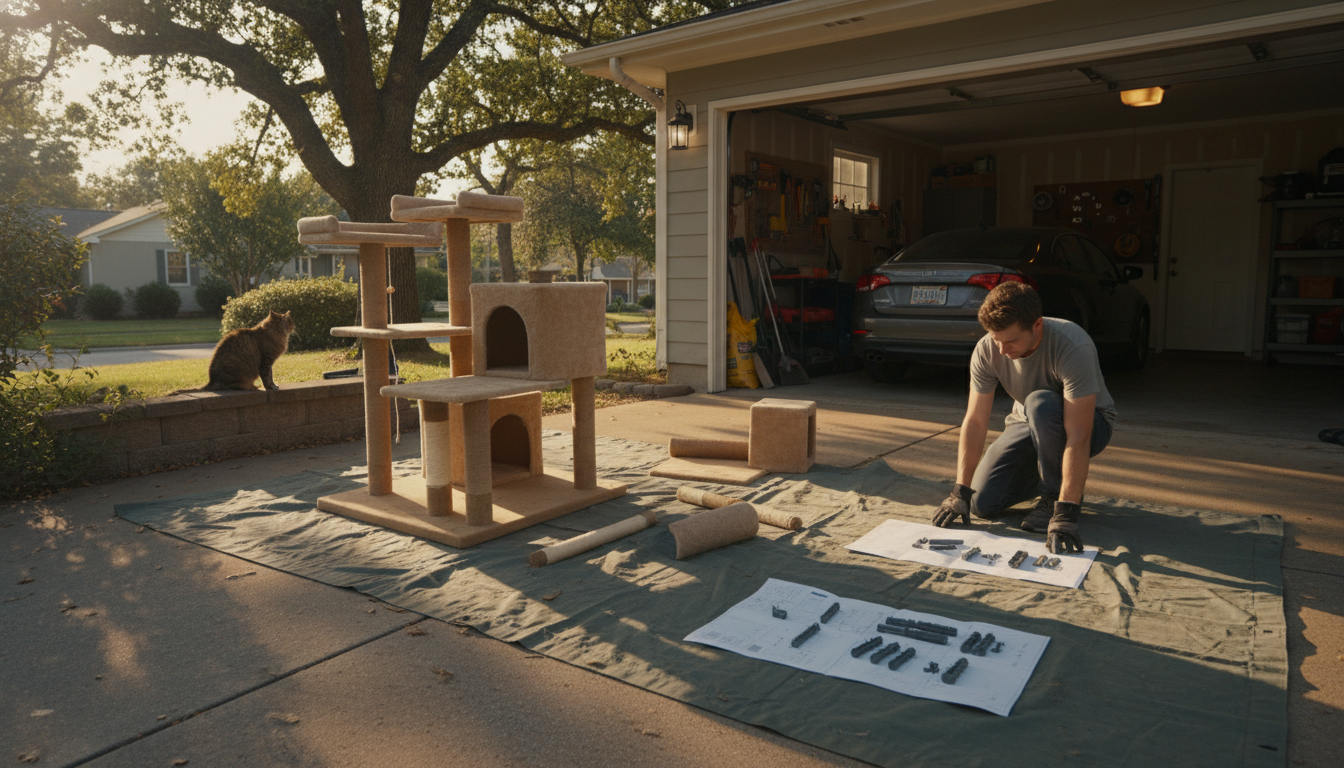
How do I choose a stable cat tree that won’t tip over?
A stable cat tree starts with the base. Look for a wide, heavy footprint that’s proportionate to the overall height—taller trees need noticeably larger bases. If you can lift the base with one hand, it’s often too light for energetic jumping, especially in multi-cat homes.
Prioritize a wide, weighted base
Choose a model with a thick base panel (not thin pressed board) and a footprint that extends beyond the main posts. Stability improves when the lowest level is broad and close to the floor, with no “top-heavy” towers perched on narrow supports.
Check post thickness and joint strength
Posts should be thick enough to resist flexing when a cat launches upward. Look for sturdy hardware and reinforced joints—wobble at the connection points is a common reason trees tip. If product photos show small screws, minimal brackets, or narrow posts supporting large platforms, that’s a red flag.
Choose a height that matches your space (and your cat)
Very tall trees can be stable, but only when designed for it. If your cat is large, older, or extremely playful, consider a slightly lower height with more spread-out platforms to reduce leverage that can pull a tree off balance.
Look for wall anchoring options
The most tip-resistant setups use an anti-tip strap or wall mount. If you’re placing the tree near a wall anyway, an anchor is a simple upgrade that dramatically improves safety—especially for ceiling-height trees.
Set it up for stability at home
Place the tree on a flat surface; thick carpet can let the base “rock.” If needed, add a non-slip mat under the base. Tighten bolts after assembly and re-tighten them after a few days of use, since new materials can settle slightly.
For a deeper walkthrough on sizing, height, and stability features to look for, visit this guide to choosing a stable indoor cat tree.
FAQ
Where should I place a cat tree to make it more stable?
Put it on a hard, level floor and as close to a wall or corner as practical to reduce side-to-side sway. Avoid thick, uneven carpet unless you use a grippy mat underneath, and keep jump-off routes clear so cats aren’t ricocheting into it.















Leave a comment