-
Shop
- Adidas
- Advanced Technologies
- AI Skills
- AI Skills Mastery 2026 Collection
- Bathroom
- Best-Sellers
- Calvin Klein
- Car Accessories
- Confidence
- Dating & Social Skills
- Digital Resources
- AI & Technology
- Beauty
- Car Buying & Ownership
- Cozy Feast Collection
- Electronics & Technology
- Financial Education
- Hobbies
- Home Styling & Organization
- Kitchen & Recipes
- Mindset
- Online Business
- Parenting & Child Development
- Personal Style & Fashion
- Pet Lifestyle & Wellness
- Smart Life with AI
- Travel Planning
- Wellness
- Yoga & Fitness
- Education & Learning
- Family & Parenting
- Fashion
- Alexander McQueen
- Bags
- Bags & Wallets
- Balenciaga
- Belts
- Blazers
- Blouses & Shirts
- Bottega Veneta
- Brunello Cucinelli
- Burberry
- Chanel
- Chloé
- Dior
- Dolce & Gabbana
- Dresses
- Etro
- Fendi
- Gucci
- Hats & Hair Accessories
- Jacquemus
- Jewelry
- Jil Sander
- Keychains
- Kiton
- Luggage
- Luggage Bags
- Miu Miu
- Off-White
- Outerwear
- Prada
- Rick Owens
- Saint Laurent
- Scarves
- Shoes
- Socks & Tights
- Sunglasses
- The Row
- Tom Ford
- Valentino
- Valentino Garavani
- Versace
- Vivienne Westwood
- Watches
- Fashion Accessories
- Furniture
- Gadgets
- Health & Beauty
- Health & Wellness
- Home & Garden
- Home Decor
- Home Electronics
- Home Supplies
- Kids & Babies
- Kitchen
- Kitchen Best-Sellers
- Lighting
- Online Business for Beginners
- Patio, Lawn & Garden
- Personal Growth
- Pet Care
- Pet Supplies
- Pets
- Smart Amazon Shopping
- Smart Home Living Guides
- Sport & Outdoors
- Stress Relief & Relaxation
- Super Deals
- TikTok Growth & Monetization Mastery
- Travel
- Travel & Adventure
- Wealth
- Wealth Building
- Budgeting & Saving
- Cryptocurrency Investing
- Debt Management
- Entrepreneurship & Business Growth
- Family Finance & Budgeting
- Financial Independence
- Financial Mindset & Psychology
- Financial Planning
- Frugal Living & Expense Hacks
- Goal Setting
- High-Income Skills
- Investing Basics
- Leadership
- Motivation
- Networking & Mentorship
- Passive Income Strategies
- Real Estate Investing
- Side Hustles
- Stock Market Investing
- Popular
- Best deals
- Blog
Solo Travel Without Loneliness: Connection & Confidence
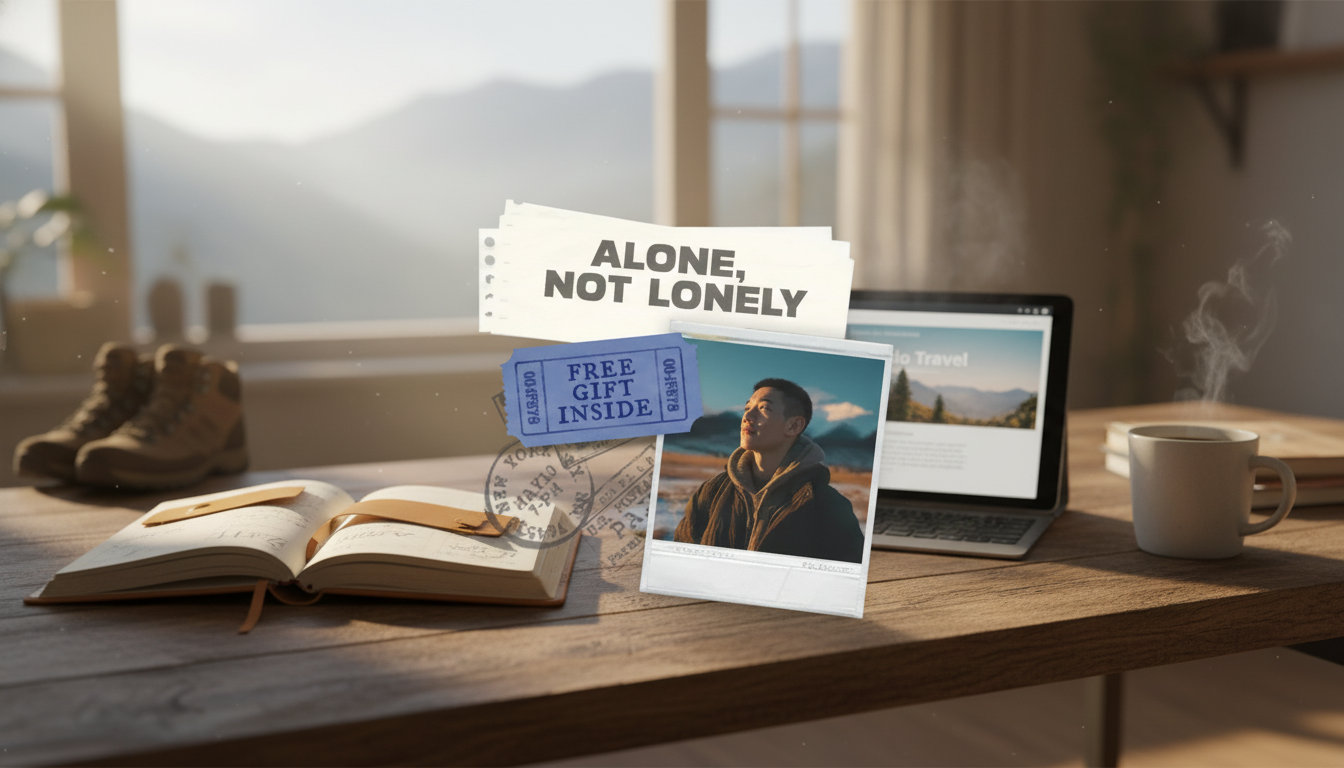
Alone, Not Lonely: A Friendly Guide to Joyful Solo Travel for Confident Explorers
Solo travel can feel wildly freeing and a little unsettling at the same time—especially when the day gets quiet and your mind starts filling the space. The goal isn’t to stay “on” socially 24/7. It’s to feel steady, capable, and open to connection when it fits. The Alone, Not Lonely: A Friendly Guide to Joyful Solo Travel (eBook) was designed to be that supportive companion: practical, grounding, and easy to reference on arrival days, slow afternoons, and quiet evenings.
What “Alone, Not Lonely” Really Means on a Trip
Being alone is a circumstance; loneliness is a signal. Solitude is often chosen and nourishing—like taking yourself to a museum, savoring a slow breakfast, or walking with no agenda. Loneliness usually shows up when there’s an unmet need for connection, reassurance, or familiarity. On a solo trip, both can appear in the same hour, and that’s normal.
Expect mood swings and let them be part of the landscape: excitement in the morning, fatigue after transit, vulnerability at dinner, and pride when you navigate something new. A simple intention helps you steer without forcing a rigid plan. Pick one primary aim for the trip—connection, creativity, rest, confidence-building, or exploration—then use it as your compass when you’re deciding what to do next.
If your itinerary is open-ended, structure can be a relief. A guide-style eBook can act like a friendly “travel buddy” that keeps you moving forward when decision fatigue hits and your brain starts interpreting silence as something being wrong.
A Simple Loneliness Plan: Before, During, After
Before you go
Choose destinations and lodging based on your social energy, not what looks most popular. A quiet guesthouse can be perfect for deep rest; a social hub (or a hotel near lively cafés) may feel better if evenings are your hardest window. Consider pre-booking one anchor experience—like a walking tour, class, or day trip—so you have at least one built-in connection point.
During the trip
Aim for “small connections” daily: brief chats, shared activities, familiar cafés, or a regular walking route. This reduces pressure to instantly “make friends” and still gives your nervous system proof that you’re not isolated.
Try a simple rhythm: morning grounding, mid-day exploration, evening reflection. Predictable structure prevents emotional spirals when you’re tired or overstimulated.
After you return
Turn the trip into lasting confidence by capturing takeaways: what felt brave, what felt hard, what felt joyful. You’re not just collecting photos—you’re collecting evidence of self-trust.
Quick tools to shift from lonely to connected
| Moment | What it can feel like | What to do next (5–15 minutes) |
|---|---|---|
| Arriving in a new place | Overwhelm, doubt | Unpack, shower, short walk, pick one nearby spot for a familiar routine (tea/coffee). |
| Eating alone | Self-consciousness | Choose a bar seat or patio, bring a book/journal, ask one low-stakes question to staff. |
| Evening downtime | Empty, isolated | Join a small group activity, call a friend, or do a “third place” visit (café, lobby, park). |
| Seeing couples/groups | Comparison, FOMO | Name the feeling, re-focus on intention, plan one connection-friendly activity tomorrow. |
| Travel mishap | Anxiety, helplessness | Use a checklist: breathe, hydrate, problem-solve one step, ask for help directly. |
Finding Connection Without Forcing It
Connection is easier when you stop trying to manufacture “best friends by tonight” energy. Instead, build repeat encounters. Go back to the same café, market, co-working spot, or walking route at similar times. Familiarity creates low-pressure openings: a nod, a “same order as yesterday,” a quick recommendation swap.
Choose social containers—situations where conversation has a natural purpose. Group tours, language exchanges, workshops, volunteer shifts, and hostel/common-area events can all work (even if you aren’t staying in a hostel). Keep it simple with a two-sentence opener: one observation plus one question. Example: “This neighborhood feels so different from downtown. Do you have a favorite spot to grab lunch around here?”
Safety and boundaries are part of confident solo travel: meet in public, share minimal personal details early, trust discomfort, and exit politely if something feels off. For broader travel safety and planning, check current guidance from the U.S. Department of State Travel Advisories and the CDC Travelers’ Health resources.
Confidence Habits for Solo Explorers
Confidence rarely arrives as a sudden feeling—it’s usually built through small, repeatable habits.
If mornings tend to set the tone for your mood, pairing travel with a simple reset like The No-Phone Morning Ritual Checklist can help you start grounded instead of reactive.
Turning Solo Time into Self-Discovery
What’s Inside the eBook and Who It’s For
Alone, Not Lonely: A Friendly Guide to Joyful Solo Travel (eBook) is best for travelers who want independence plus warmth—support for emotions without a rigid itinerary. It focuses on overcoming loneliness on solo trips, building gentle connection, and using travel for self-discovery.
It’s a great fit for first-time solo travelers, newly single travelers, and anyone rebuilding confidence after a tough season. For moments when stress shows up physically—like cold hands/feet, tension, or shallow breathing—addressing the body first can calm the mind. Cold Hands, Warm Clues (digital guide) offers practical wellness support you can use anywhere.
FAQ
How to travel alone and not be lonely
Plan one daily connection opportunity (tour, class, or repeat café), keep a light routine to reduce spirals, and set realistic expectations—aim for one friendly interaction rather than instant friendships. Use repeat locations to create familiar faces, keep evenings supported with a simple plan (lively dinner spot, short call home, journaling), and prioritize boundaries by meeting in public and trusting discomfort.
Recommended for you


Emergency Trunk Essentials: What to Keep in Your Car
May 26, 2026
Desigual Zip-Pocket Rucksack: Fits a 13-Inch Laptop?
May 26, 2026













Leave a comment